Daibutsu, Kamakura

Daibutsu, Kamakura
Daibutsu in Kamakura, June 2010. There were thousands of school kids visiting that day. It was still great fun.
Showing posts with label Tokugawa. Show all posts

Friday, May 11, 2012

1000 Samurai in Nikko

This is the 1000 Samurai Festival from Nikko, Japan in 2004. It celebrates the great processions of samurai and daimyo to pay homage to the great Shogun Tokugawa Ieyasu at his mausoleum at Toshogu in Nikko. Funny to see samurai wearing glasses and smiling. Very fun festival. I highly recommend it.


Friday, September 16, 2011

Otawara Lord's Residence?

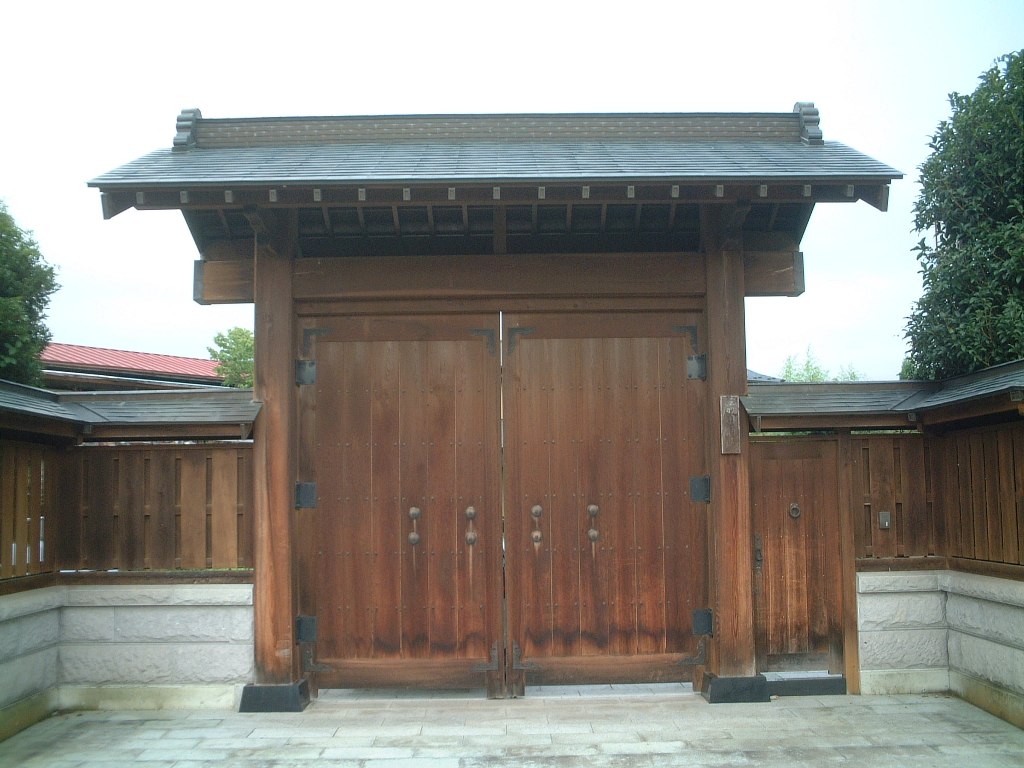
While walking in Otawara in Tochigi-ken I came across this really interesting gate. When I saw it I thought it reminded me of a gate to the Edo residence of a minor Daimyo or some other Tokugawa official. But it is not in Edo but in a very average neighborhood in Otawara. I tried to peak through the gate and I think it's just someone's residence. I would love to live in a house with an entrance like this.


Thursday, February 10, 2011

Tour of Duty: Samurai, Military Service in Edo

I recently read the book Tour of Duty by Constantine Nomikos Vaporis is professor of history at the University of Maryland, Baltimore County. An excellent book on the sankin kotai system, the duty of samurai to "attend" the Shogun in Edo period Japan (1603-1868).

Alternate attendance (sankin kotai) was one of the central institutions of Edo-period (1603–1868) Japan and one of the most unusual examples of a system of enforced elite mobility in world history. It required the daimyo to divide their time between their domains and the city of Edo, where they waited upon the Tokugawa shogun. Based on a prodigious amount of research in both published and archival primary sources, Tour of Duty renders alternate attendance as a lived experience, for not only the daimyo but also the samurai retainers who accompanied them. Beyond exploring the nature of travel to and from the capital as well as the period of enforced bachelorhood there, Constantine Vaporis elucidates—for the first time—the significance of alternate attendance as an engine of cultural, intellectual, material, and technological exchange.

Vaporis argues against the view that cultural change simply emanated from the center (Edo) and reveals more complex patterns of cultural circulation and production taking place between the domains and Edo and among distant parts of Japan. What is generally known as “Edo culture” in fact incorporated elements from the localities. In some cases, Edo acted as a nexus for exchange; at other times, culture traveled from one area to another without passing through the capital. As a result, even those who did not directly participate in alternate attendance experienced a world much larger than their own. Vaporis begins by detailing the nature of the trip to and from the capital for one particular large-scale domain, Tosa, and its men and goes on to analyze the political and cultural meanings of the processions of the daimyo and their extensive entourages up and down the highways. These parade-like movements were replete with symbolic import for the nature of early modern governance. Later chapters are concerned with the physical and social environment experienced by the daimyo’s retainers in Edo; they also address the question of who went to Edo and why, the network of physical spaces in which the domainal samurai lived, the issue of staffing, political power, and the daily lives and consumption habits of retainers. Finally, Vaporis examines retainers as carriers of culture, both in a literal and a figurative sense. In doing so, he reveals the significance of travel for retainers and their identity as consumers and producers of culture, thus proposing a multivalent model of cultural change. (University of Hawai`i Press)

Tour of Duty is one of nearly 200 books submitted for the 2011 International Convention of Asia Scholars (ICAS) Book Prize. The book is currently in second place with online polling taking place until March 20th. If you read this excellent book and enjoyed it like me, please go to the ICAS website and place your vote for Tour of Duty by Constatine Vaporis.

Sunday, April 11, 2010

Sakamoto Ryoma and the Meiji Restoration

Sakamoto Ryoma is big in Japan right now with the current Taiga drama Ryomaden. But even before this drama, Ryoma was probably the most famous and popular historical figure in Japanese history. Why is that and is his popularity deserved? Recently I read Marius Jansen's book Sakamoto Ryoma and the Meiji Restoration. Jansen, who passed away in 2000, was a professor of Japanese History at Princeton University and author of more than twenty books of which this book he is probably best known for. First published in 1961, this book is still considered one of the excellent sources regarding the Bakumatsu period. In Sakamoto Ryoma and the Meiji Restoration, Jansen describes the societal transformation from the late Tokugawa Bakufu through the restoration of power to the Emperor. Jansen focused mainly on Sakamoto Ryoma but also devoted much of the book to Nakaoka Shintaro, another important figure in Meiji Restoration or Bakumatsu period. The title of the book really could have been Sakamoto Ryoma, Nakaoka Shintaro and the Meiji Restoration. Jansen begins by covering the political and economic situation of Japan in general and then moves to the political and economic issues in the domain of Tosa, Ryoma's home. Finally Jansen narrows the focus of the book further to that of the actions of the shishi and specifically of Ryoma and Shintaro. The shishi were the samurai, often ronin, who worked and fought for the overthrow of the Tokugawa Bakufu and the restoration of the emperor. One of the aspects I like about this book is how Jansen wrote it in a manner that could be easily understood by readers who may not be well-versed in Japanese history or the Bakumatsu period.

I am not going to detail the events of the Bakumatsu that Jansen covers in the book since these events are already so well known. I will highlight some interesting points I took from the book and use the book to try and answer some questions about Sakamoto Ryoma. It would be an understatement to say that Sakamoto Ryoma is one of the key figures in the Meiji Restoration period. Sakamoto Ryoma is a political hero in Japan and even a celebrity star. You can find his name and face everywhere. His grave site in Kyoto is a popular destination and although Nakaoka Shintaro is also buried there, visitors often leave with Sakamoto Ryoma merchandise which they purchase nearby. I am pretty sure there are not too many people buying Nakaoka Shintaro merchandise. This raises questions such as why is the popularity of Ryoma so high and is it deserved? How much of a contribution did Ryoma actually make to the events of the time?And how original were some of Ryoma's important ideas?

Jansen describes Ryoma's development from the early years of the Bakumatsu period when loyalist parties were being formed. He points out that both Ryoma and Shintaro were not so much innovators as they were followers of the opinion of their peers during this early time. They were literate but by no measure were they intellectuals. Even a few years later, a friend of Ryoma's, Hirai Shujiro, warned his sister against getting involved in Ryoma's plans: "Although Ryoma is a splendid fellow, he doesn't have any learning, and therefore he sometimes makes serious mistakes" (p80). One of the best examples of Ryoma's lack of political knowledge and education in his early years was his famous meeting with a group of samurai from Mito domain who had traveled to Tosa to win support for their loyalist cause. Ryoma and several others traveled to the Tosa border to meet with the Mito group. The diary of one of the Mito messengers revealed the lack of political awareness of the the Tosa group in 1858. "The two outsiders [Tosa men]," he wrote, "don't know a thing about their han's affairs; Ryoma doesn't even know the names of any of the ministers" (p89-90). Clearly Ryoma was not one of the most brilliant people around in his younger years. He was not highly educated and his writing ability was poor. Jansen describes Ryoma's letters to his sister as awkward and his vocabulary was limited. He certainly was not a person developing creative philosophies or ideas. So how did Ryoma come to be such an important figure?

In 1862, Ryoma fled Tosa. But the following months showed how little he realized the complexity of the problems facing Japan. Following the logic of a simple swordsman, Ryoma concluded that assassinating the "cowardly leaders" was the best course of action and his target would be Katsu Kaishu, a leading Tokugawa official. It is at this point according to Jansen that we see for the first time Ryoma's ability to adapt and learn. When confronted with evidence that he was wrong about Kaishu, Ryoma reconsiders his goal and decides to become Kaishu's disciple. Jansen states that this event showed Ryoma's growing sophistication and maturity (p153). Jansen also points out that one of the most important aspects of Ryoma's development was the fact that his duties for Kaishu brought him into contact with some of the most enlightened Tokugawa councillors where he first heard the possibility of a peaceful transfer of power from shogun to emperor. Already by 1863 as Ryoma continued to develop, Kaishu began entrusting him with more responsible and difficult missions (p169). Clearly Kaishu saw something in Ryoma to trust him with these types of assignments. Although Ryoma was not well educated, Kaishu's trust in him showed that Ryoma had other strong qualities. Ryoma's qualities lay in the fact that he was skilled at developing relationships which indicates that he probably had a high level of emotional intelligence.

Under Kaishu, Ryoma continued to refine and moderate his own political thinking. However, by late 1864 Kaishu was dismissed from his post and Ryoma was now back on his own as a ronin. But this now eventually brings Ryoma under the protection of Satsuma and the beginning of his important relationship with that domain. And as we all know, Ryoma may be most famous for his work in bringing about the Satsuma-Choshu alliance. The Sat-Cho alliance is certainly one of the most important events during the Bakumatsu period so the question is really how important was Ryoma in bringing this together? The fact is Ryoma was not solely responsible for bringing Satsuma and Choshu together. Although a quick scan of the internet for Sakamoto Ryoma would often tell you that he was. Nakaoka Shintaro joined the Choshu loyalists during the same time that Ryoma was working with Satsuma and he worked to convince the Choshu leaders of the importance of an alliance (p186). In addition, other Tosa Loyalists worked towards this alliance by working closely with the Kyoto nobles who had been expelled from the capital. I don't think this should take away from what Ryoma was able to accomplish or the significance of his role. However, at the very least Shintaro should be given as much credit for his work as Ryoma. In some ways, Shintaro's assignment was even more difficult than Ryoma's. Shintaro had to convince a Choshu domain whose bitterness and hatred towards Satsuma was strong due to Satsuma previously siding with the Bakufu in expelling Choshu forces from Kyoto.

Ryoma is of course known for more than just his work in bringing about the Sat-Cho alliance. He is also known for his efforts in developing a modern navy and the Kaientai, the naval auxiliary unit that also would later become one of the first modern corporations in Japan. I am not going to get into those accomplishments of Ryoma but rather his development of the Eight-Point Plan for which he his also famous for. Jansen states that Ryoma's ideas formed during his years of service with Kaishu where he was exposed to the idea that the shogun should resign in favor of the emperor. He had also become familiar with the idea of a conciliar form of government from bakufu officials such as Okubo Ichio who had developed ideas about a council of lords (p294). Similar ideas were also proposed by others such as lord Matsudaira Shungaku. Ryoma's time in Nagasaki also exposed him to many more ideas regarding new forms of government. It was in Nagasaki where Ryoma met Nagaoka Kenkichi who some believe was the person who first wrote the plan for a new government which came to be known as Sakamoto's Eight-Point Plan. However, Jansen states that regardless of who it was who worded the Eight-Point Plan, there can be no doubt that it represented ideas toward which Ryoma had been reaching for several years (p295).

So why is Ryoma so much more famous than Nakaoka Shintaro and the many other important players involved in the Meiji Restoration? Jansen provides some excellent examples for why Ryoma became so popular. Following the assassination of Ryoma and Shintaro, Jansen states "Restoration leaders lamented the loss of both shishi. Iwakura particularly regretted the death of Nakaoka, but on the whole Sakamoto Ryoma's warm and engaging personality won him more eulogies, as they had won him more friends" (p345). "Nakaoka was a sage," Tanaka Koken wrote, "Sakamoto a real hero." As Jansen states, "Ryoma's romantic career and bouyant, self-confidant bearing and correspondence lent themselves well to the image the nation wished to hold of its Restoration shishi." Another interesting point that Jansen mentions regarding Ryoma's popularity is his lack of involvement with the Meiji government. Ryoma may not have wanted to participate in the new government even had he not been assassinated. But the fact that he was never a part of the new Meiji government meant that his image would never be tainted by the negative politics and issues of the new government.

So does Ryoma's fame exceed his actual contributions during the restoration period? Of course it does. His likeness is everywhere in Japan including on toilet paper and candy wrappers. He is probably the most famous and popular figure in Japanese history. He is far more famous and popular than other Bakumatsu figures, especially Nakaoka Shintaro, even though Shintaro and others probably contributed as much to the restoration as Sakamoto Ryoma did.

Was Ryoma the originator of the major ideas that he is known for such as the Eight-Point Plan? I think it's safe to say that no, he was not an originator of the ideas he is known for but rather modified and refined these ideas. Marius Jansen says as much when he states that Kenkichi may have actually conceived of the idea of the Eight-Point Plan.

The reality of Ryoma in Japan is overshadowed by his myth and dramatic storytelling. Shiba Ryotaro's eight volume novel Ryoma ga Yuku is probably the biggest reason for Ryoma's fame and popularity in post-war Japan. Although Ryotaro's work is fiction and he took much poetic license when he wrote it, the novel still contributed greatly to Ryoma's legend and popularity. But hold on all you Ryoma fans out there. Don't come banging down my door just yet. The fact is Ryoma WAS one of the most significant figures during the Bakumatsu. His personality, his character, his ability to develop relationships and create alliances allowed him to do what few others could have done. Maybe the Sat-Cho alliance would have materialized eventually without Ryoma's efforts. But without his work, it would probably not have happened when it did. And maybe Ryoma did not originate the Eight-Point Plan. But as Jansen described, Ryoma modified it and expanded on it and he used his abilities to convince others of the viability of this plan including his lord Yamauchi Yodo who took the plan to the shogun and convinced him to resign his powers to the emperor. He was probably the only one who could have done that at that time and had he not, the end of the Bakumatsu likely would have been far bloodier. I think you will find many examples throughout history of famous historical figures who may not have developed many of the original ideas they are known for but they took those ideas and improved on them or used their charisma and skill to carry them through. Sakamoto Ryoma is no different. Marius Jansen did an excellent job showing how Ryoma grew and developed from a young, ignorant samurai from Tosa to a person respected by some of the most powerful figures of the Bakumatsu period. That by itself demonstrates how significant a person Sakamoto Ryoma was.

Friday, March 26, 2010

150th Anniversary of 1st Japanese Embassy to America

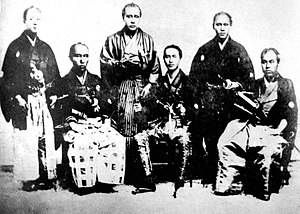
Samurai sailors from the Kanrin Maru. (Wikipedia Commons)

This month marks the 150th anniversary of the first official Japanese embassy to the United States. In 1860, the Tokugawa shogunate government sent a group of samurai to America in order to ratify treaties between the two countries. The treaties were the result of the visit by the American "Black Ships" in 1853 headed by Commodore Matthew Perry whose purpose was to "pry open" the country of Japan. Although there had been a small handful of Japanese who had visited the United States previously, this official visit attracted much attention and curiosity among the citizens of San Francisco and the nation. Thousands lined the shore in San Francisco to watch the arrival of the Kanrin Maru, the small Japanese ship manned by samurai sailors. The Kanrin Maru was piloted by Katsu Kaishu, the man who would be the mentor to Sakamoto Ryoma, one of the famous leaders of the Bakumatsu period and the restoration of the emperor.

Newspapers reported on the visit to the smallest of details and reflected on the popular view of the time at how awed these visitors would be as they encountered Western civilization and American progress. However, that outlook changed when the stately, and always polite, Japanese ambassadors occasionally encountered rowdy crowds who mobbed them to get a glimpse of the exotic Japanese. Dismayed by these unseemly popular displays, some editorials began asking just who was really more "civilized".

While the Kanrin Maru and her crew remained in San Francisco for a period of time before returning to Japan, the embassy leaders traveled to Washington to meet President Buchanan at the White House where they were treated to formal dinners. In New York, the Japanese were welcomed by a grand parade up Broadway watched by half a million people. Unfortunately the excitement of the embassy was soon washed away by the civil wars that engulfed both nations later in the 1860s.

To mark the historic event, the city if San Francisco dedicated a bronze plaque last week at Pier 9 to honor where the samurai from the Kanrin Maru came ashore on March 17, 1860. Other events will include the planting of sakura trees in Japantown and a visit by a Japanese tall ship on May 5th as well as an exhibition at the Asian Art Museum called "Japan's Early Ambassadors to San Francisco."


President Buchanan receiving the embassy in Washington. (Wikipedia Commons)

Thursday, December 17, 2009

The 47 Loyal Samurai

The 47 Loyal Samurai is one of the most famous stories in all of Japanese history. The story of the 47 are referred to by many names including The Forty-seven Ronin, The Ako Samurai, the Ako Vendetta, and the Genroku Ako Incident. Fictionalized accounts of the incident are known as Chushingura. There have been literally dozens and dozens of books, plays, TV shows, and movies about this event.

Here is the story of the events that led to the famous Ako Vendetta.

In 1701, imperial envoys were being entertained at Edo Castle after their arrival from Kyoto. Supervising the ceremonies was Kira no Suke Yoshinaka (1641-1702). Kira sent a message to a Kajikawa Yoriteru, a keeper of the castle, that the presentation of gifts would take place earlier than scheduled. To confirm these arrangements, Yoriteru proceeded along the main corridor, known as the Corridor of Pines on account of its paintings, in search of Kira. Unable to find him, he asked Asano Naganori (1667-1701), the daimyo lord charged with entertaining the imperial envoys, be summoned. Having exchanged the usual greetings, assuring each other of their cooperation, Asano returned to his seat. Then Kira appeared, and Yoriteru approached him to confirm the timing of the ceremonies. As the men were standing in discussion, Asano suddenly struck Kira with his sword from behind, shouting: "Did you forget my recent grievance?" Taken by surprise, Kira turned around and attempted to flee, but Asano struck him again, causing him to fall. At this point Yoriteru managed to restrain Asano, who was then led away shouting loudly that though the time and place were inappropriate, for some days he nursed a grievance against Kira and thus had to strike him. That same evening Asano was ordered by the authorities to disembowel himself. Because the area had been defiled by the shedding of blood, the ceremonies for the envoys were moved to different room s of the castle.

This is what the contemporaneous records tell us about the event that 18 months later caused forty-seven of Asano Naganori's retainers to attack Kira Yoshinaka's mansion in the dead of night, cut off his head, and place it on Asano's grave at Sengakuji. Forty-six of the retainers gave themselves up to the authorities and were ordered to commit suicide some two months later.

Over time the story transformed and developed. Kira was made the evil villain--the greedy, corrupt government official who had insulted Lord Asano one too many times. The 47 loyal samurai were made to be the perfect examples of samurai loyalty and bushido. They avenged their lord by taking the villainous Kira Yoshinaka's head and placing it on Asano's grave. The 47 samurai brilliantly lulled Kira into complacency by waiting almost 18 months to seek their revenge and by acting like drunks and cowards in order to throw Kira off. They then turned themselves into the authorities and later committed seppuku like honorable samurai.

However, as is usually the case with famous stories from history, events usually happened somewhat different than what the later stories tell. Author Beatrice Bodart-Baily, in the book The Dog Shogun, provides and excellent examination surrounding the famous incident of the Forty-seven Loyal Ronin. The author examines how the incident, rather than glorifying the samurai, speaks much more of the decline of the warrior tradition. Here are some interesting points from the book regarding the 47 Ronin incident. Some of these points may seem pretty obvious and yet the loyalty and honor of the 47 Ronin are glorified even today.

  • Asano Naganori showed concern neither for the reputation of his house nor the fate of his family and retainers when he attacked Kira. Asano should have known that attacking a Shogunal official in the Shogun's castle was a grave offence that likely would result in his death and the destruction of his house and confiscation of his domain thereby destroying the livelihood of his loyal retainers.
  • Asano was a student of Confucian scholar Yamaga Soko, whose principal teaching was that in peacetime the samurai "should set a high example of devotion to duty." However, although apprenticed to Soko in the military arts, Asano showed a marked lack of samurai spirit as well as a lack of sword skill in his attack on Kira. Asano attacked Kira from behind while Kira was engaged in a discussion and Asano did not succeed in killing Kira. This showed neither courage nor ability.
  • There is no evidence in legitimate historical documents that shows that Kira Yoshinaka was the villain so often portrayed that would justify an attack on him in the Shogun's castle. But Kira had to become the villain in order to make the story of the 47 Loyal Ronin what it was. Little is ever mentioned of Kira's 40 year service in a responsible government position, only that he was a greedy official who gravely insulted Asano. Both of which there is a lack of evidence to support.
  • It has been argued by some that since the 47 Ronin knowingly violated the law of the Bakufu when they attacked Kira's mansion, it was absurd for the samurai to notify the authorities on completion of their crime with the message that they were now awaiting their orders rather than immediately committing seppuku. This leads some to suspect that the driving force was NOT the revenge of their dead lord but the hope that praise and admiration for this act of "loyalty" would secure them a pardon and reemployment elsewhere. If they had not expected to live, why did they not disembowel themselves immediately on completion of their revenge?
  • With a year and a half between Asano Naganori's death and the slaying of Kira, some had wondered whether the revenge was really a priority of Oishi Kuranosuke, the chief retainer of Asano Naganori. Of course the story goes that it was all part of Kuranosuke's plan to lull Kira into complacency. Yet the point has been made of the elaborate preparations for the attack in the dead of the night, after Kira's staff was tired out by entertaining guests and when snow muffled the footsteps of the attackers. Some contemporaries such as Sato Naotaka and Dazai Shundai thought such trickery was unworthy of a samurai.
  • Kira, according to his income, was a man of lowly hatamoto status. The fact that 16 of his retainers were killed in the attack, while only 4 attackers received relatively light wounds, indicated that this was an unequal battle. The large loss of life among the Kira retainers and servants could have been avoided in a spirited day-time attack on Kira on the open road by just a few men in traditional samurai fashion. In such an assault the attackers would, however, most likely have been cut down immediately afterwards and the chance of a pardon lost. The Bakufu's charge against the 47 Ronin after the incident explicitly mentions the use of projectile weapons which could mean anything from arrows and catapults to firearms. It may well also refer to spears. This clearly gave the attackers an advantage against the Kira retainers who were probably only armed with swords.
  • Consideration should be also given to the public emphasis on loyalty and filial piety. The 47 Ronin certainly must have been aware that at times Shogun Tokugawa Tsunayoshi would overturn decisions of his officials to heap praise and rewards on people who in his opinion had lived up to these ideals particularly well. The suggestion that the Ako samurai did not commit suicide but gave themselves up to the authorities in the hope of being singled out for such shogunal praise was not altogether unlikely at the time.
  • When the loyalty of the 47 are referred to, it is of course the loyalty to their immediate lord, for Asano's retainers had disobeyed the laws of the bakufu in order to discharge their duties towards their lord.

The picture that emerges from the story of the 47 Loyal Ronin is that of desperate men trying to survive in the maelstrom of change. With an abrupt discrediting of traditional values, the 5th shogun attempted a major paradigm change. This must have produced feelings of helplessness and confusion in the minds of many samurai as they attempted to make their way in this changed environment with its fundamental revision of the traditional value system. The Ako samurai came to symbolize this suffering as men from a nostalgic past, as battlers against the harsh government of the day that was intent on destroying their cherished values. Their summary death ordered by an unpopular shogun permitted quick deification. To complete the process of creating larger-than-life-size images, any human foibles had to be shed. Every part of their action came to be uncritically accepted as serving a greater public good, and those that appealed to an examination of the facts were in turn accused of delusion.

Monday, December 14, 2009

Samurai Misconceptions

All Samurai followed a chivalrous code of ethics known as "Bushido"

With books titled "Hagakure: The Book of the Samurai" and "Budo Shoshinshu: The Code of the Samurai" flooding the market, one generally comes to think that the samurai ALL followed the Bushido, or else they weren't really samurai. This just isn't the case.

Bushi-do is correctly translated as "The Way of the Warrior". However, the Bushido was nothing more of an invention of the Edo Jidai (Edo era) meant to keep samurai subservient to their employing daimyos. The Edo Jidai was the 250 year long peace ruled over by the last shogunate (Tokugawa Shogunate), which directly proceeded the Warring States era (better known as the Sengoku Jidai). The shogunate was very paranoid during this period; it was, after all, the third shogunate, the first two having collapsed into warfare. Several new practices came into play during this time period; for example, daimyo were expected to spend part of their time in Edo (now known as Tokyo), the seat of the shogunate's power. This was to keep unruly daimyo (like Shimazu or Mori daimyo, who would later tear down the shogunal government) in check.

Another practice was a serious enforcement of a samurai's loyalty to his daimyo. During the Sengoku Jidai, there were several instances of samurai turning on their daimyo, most often to disastrous affects. The shogunate made turning on one's daimyo the most serious offense for a samurai.

Also, during this time of peace, the samurai no longer had as much purpose in Japanese society. They became administrators and small time government officials. With this pretty much 'excuse' for existence, a ronin named Yamaga Soko took the Confucian principals that had been governing Japanese life for centuries and gave the samurai a new reason for existence. Soko's codices later became the foundation for the bushido, which received great support from the shogunate. The shogunate was looking for ways to insure that the samurai did not rise up against their daimyo. As one of Soko's rules was a complete, sincere devotion to one's feudal lord, this fit perfectly into the shogunate's paranoid attempts to suppress all possible revolts... and it worked.

Samurai before the Edo Jidai did NOT follow any "Bushi-do", then. In fact, there are so many examples of betrayal, uncouthness, and other acts completely contrary to the bushido in the Sengoku Jidai that it becomes glaringly obvious. This isn't to say however that there weren't noble samurai. In fact, Uesugi Kenshin is renowned for his honor in his battles with Takeda Shingen in the late 16th century.


This information comes directly from the Samurai Archives. A great source for information about the samurai and other aspects of Japanese history prior to the Meiji Restoration.

Saturday, November 21, 2009

Samurai Assassin


On a snowy spring day in 1860, throngs of men gather at the gates of Japan's Edo Castle in hopes of assassinating Shogunate leader Ii Naosuke. Upset with the way his life is going, ronin Niiro Tsuruchiyo (Toshiro Mifune) becomes involved in the coup, ultimately seeking a spot in a great samurai house. With no family to speak of and a broken heart, Niiro has nothing to lose -- and will stop at nothing to become a full-fledged samurai. Will he succeed?

This is an awesome movie. This movie is about one of the major events in Japanese history, the assassination of Ii Naosuke, the defacto head of the Tokugawa shogunate in 1860. The Tokugawa were headed by a child shogun at this time, so Ii Naosuke wielded the real power. And he used that power with bloody efficiency. The Tokugawa had been growing weak for decades and after the American Black Ships sailed into Tokyo Bay in the early 1850s, the Tokugawa's weakness became all the more apparent. But Naosuke was intent on reestablishing Tokugawa supremacy and so he instigated the bloody Ansei Purge. All those he deemed disloyal or a threat, even daimyo lords, were either imprisoned or put to death. A group of Mito samurai felt it was their duty to eliminate Naosuke. And that is what this movie is about. This group of Mito samurai along with other disaffected samurai such as Niiro Tsuruchiyo, plotted to kill Naosuke.

This movie instantly joins my select group of favorite films alongside Seven Samurai, Seppuku and several others. This was a great, great movie. So much better than Shinsengumi: Assassins of Honor which is another film starring Mifune that takes place during the same time period. Samurai Assassin was awesome because it was not just a simple retelling of this event. The movie includes a deeper story about Tsuruchiyo's background that comes to light in a shocking realization at the end of the film. I have seen several great battle scenes in various films involving groups of samurai and this film has one of the best. The final assassination battle involved dozens of samurai in a brutally realistic battle to the death. Incredible. If you are familiar with the historical events of this period, especially regarding Ii Naosuke, then this film will mean so much more. However, if you are not familiar with this time period, this is still an awesome movie to watch. Unlike Shinsengumi, which will make little sense to those not familiar with that period, Samurai Assassin will still be a highly entertaining film even if you do not know the history behind it.

Friday, November 06, 2009

Samurai Spy


Years of warfare end in a Japan unified under the Tokugawa shogunate, and samurai spy Sasuke Sarutobi, tired of conflict, longs for peace. When a high-ranking spy named Tatewaki Koriyama defects from the shogun to a rival clan, however, the world of swordsman is thrown into turmoil. After Sasuke is unwittingly drawn into the conflict, he tracks Tatewaki, while a mysterious, white-hooded figure seems to hunt them both. By tale's end, no one is who they seemed to be, and the truth is far more personal than anyone suspected. Director Masahiro Shinoda's Samurai Spy, filled with clan intrigue, ninja spies, and multiple double crosses, marks a bold stylistic departure from swordplay convention.

Ibun Sarutobi Sasuke is the Japanese name of this film. This movie takes place 14 years after the great battle of Sekigahara in 1600 and in the days and months leading up to the final ultimate battle between the Tokugawa and the Toyotomi in the Battle of Osaka in 1614. Samurai Spies and ninja from both sides are battling it out in constantly shifting alliances. No one can be sure whose side any person or group is on. Sasuke is tired of the wars from the past but he is unable to avoid being drawn in.

Although the title is not very creative, this is a pretty damn good movie with many plot twists and surprises. It's unfortunate that they couldn't come up with a better name for Western audiences so people would not think this is just some corny samurai/ninja flick. There are some very good sword fighting scenes involving both samurai and ninja. The ninja action was not cheesy or silly at all. In fact, one of the final combat scenes between Sasuke and two ninja was pretty damn cool with just the right amount of violence and gore without making it a goofy chanbara scene. I really liked the mix of samurai and ninjas and the ninja were not overused in this film so it actually gave the whole espionage aspect a bit of believability in my opinion. It was a more realistic portrayal of espionage, conspiracies and political power struggles than some other movies I've watched. This film, like many other samurai movies with many characters, really requires you to pay attention closely to keep up with whose who.

Saturday, October 17, 2009

Shogun's Samurai: The Yagyu Clan Conspiracy


Following the death of the Shogun, it becomes evident that his death was no accident. He was poisoned because he wanted his second-son to be heir to his throne. A battle between the eldest and his younger brother erupts. Warriors take each side swearing devotion to the prospective lords. The plot to pit brother against brother is secretly being controlled by the Yagyu clan, a group of warriors who have trained the Tokugawa shogunate's family in the art of swordsmanship for generations. A group of Imperial nobles are also secretly pulling the strings of this plot, hoping to weaken the power of the Shogunate and restore power to the Emperor.

This film was released in 1978 and stars Sonny Chiba and Toshiro Mifune. The plot of this movie surrounds the death of the second Tokugawa Shogun Hidetada. The movie is based on what is believed to have been a true rivalry between the real Tokugawa Iemitsu, the eldest son of Shogun Hidetada, and Tokugawa Tadanaga, the second son of Hidetada. In reality, Tokugawa Hidetada had abdicated rule to Iemitsu in 1623 but the movie plays it a different way from historical reality. In the film, Hidetada dies before naming his heir but apparently he had told several people that he planned on naming Tadanaga as his heir going against the tradition of naming the eldest son. The head of the Yagyu clan who was loyal to Iemitsu became aware of this and they did not agree with Hidetada's plan and therefore the Yagyu plotted to do something about it. So they assassinated Hidetada.

This is a Good movie with many, many good sword fighting scenes and political intrigue. The ending of the movie is also a complete shocker and is a total twist from historical reality. But it is interesting to imagine if this really happened historically. Conspiracy theorists would love this type of movie. This is one huge conspiracy theory.

Wednesday, October 14, 2009

Samurai Resurrection


This movie was released in 2003 and stars Yosuke Kubozuka as Amakusa who has risen from the dead to seek revenge.

In 1637, 37,000 peasants perished in the Shimabara Christian revolt; among them, the leader of that uprising, Shiro Amakusa. More than a decade later, Amakusa rises from the dead hell-bent on revenge. Resurrecting a ghastly army of living dead master swordsman by way of an occult art called "Makai Tensho" (demonic transmigration), he sets his sights on overthrowing the Tokugawa Shogunate. Standing in their way is legendary samurai Jubei Yagyu, who will have to fight the reincarnation of his own father before a fierce final confrontation with Shiro Amakusa himself.

This movie will have more meaning if you have some understanding of Japanese history otherwise Jubei's duel with the dead Miyamoto Musashi will have less meaning or the resurrection of THE shogun himself, Tokugawa Ieyasu, will be won't mean as much. Yes, Ieyasu rises from the dead from his shrine in Nikko. The opening battle scene, although short, is impressive. It is an interesting samurai/horror film although I would have liked to have seen more sword fighting and more intense horror parts. This is film that really requires a beer or two or three or four to fully enjoy.

Sunday, October 11, 2009

The Shadow Hunters


1972 chanbara (sword fighting) flick starring Ishihara Yujiro.

During the corrupt rule of the Tokugawa shogunate, three cold-blooded killers live only to deliver death to their elusive prey--ninjas! These are the Shadow Hunters. A simple task becomes deadly when the three assassins are hired to ensure that a vital deed is safely delivered to Edo. Along the way, ninja, double-agents, and sexy female assassins will team up to deliver a deed of their own--a dirty deed of death to the Shadow Hunters.

This film fits right in with the classic cheesy 70s chanbara flicks including cheesy 70's mustaches, hairdos and music. Add in some decent sword fighting scenes, ninja acrobatics, and a little female flesh, and it all adds up to an entertaining night of movie watching, especially with a bowl of popcorn and some Newcastle Brown Ale. Probably the most entertaining character is Sunlight, one of the Shadow Hunters. Sunlight sports a thick mustache and pimp-like fur coat and spends much of the movie womanizing and flirting. Later, Sunlight takes a spear through the chest like it was mosquito bite. There are a lot of rolling heads and gushing veins in this movie as would be expected but also an extreme scene where a topless female assassin is cut down in a pretty shocking fashion.

Saturday, October 10, 2009

The Sword of Doom (Dai-Bosatsu toge)


This is a 1966 black and white film from director Kihachi Okamoto. The Japanese name of the film is Dai-Bosatsu toge which I believe means "The Pass of the Boddhisattva".

Tatsuya Nakadai and Toshiro Mifune star in the story of a wandering samurai who exists in a maelstrom of violence. A gifted swordsman-plying his trade during the chaotic final days of the Tokugawa Shogunate's rule-Ryunosuke (Nakadai) kills without remorse, without mercy. It is a way of life that ultimately leads to madness. The Sword of Doom is a thrilling story of a man who choses to devote his life to evil.

This movie is marvelously shot in black and white which enhances the grim background of the story. The movie is full of incredible and stunning sword fights, some of the best I have seen in any movie. One of the most suspenseful and awesome duels involved bokken, wooden swords. The tension and suspense as the two combatants stared each other down was edge-of-the seat awesome. It is Toshiro Mifune, who plays sensei Shimada, whose words about the sword being the extension of the soul which is probably responsible for Ryunosuke's final slide into madness and leads to his bloody rampage at a brothel. This movie includes some of the political intrigue of the time with the bloody and violent samurai corps of the Shogun, the Shinsengumi, but the movie is really about the talented but extremely disturbed young samurai. One thing about this movie is the ending, it will shock most people. Some will like it but others will be left saying "WTF" and be disappointed. One of the reasons the ending occurs the way it does is because this film was supposed to be the first of a trilogy but for some reason the remaining films were unfortunately never made. However, this is one of the few films that makes me want to watch it again immediately. It was good, really good. But the very last scene nevertheless had me saying one huge "WTF JUST HAPPENED".

Friday, October 02, 2009

Battle of Sekigahara video

I watched this History channel show earlier this year. It's about Tokugawa Ieyasu and the Battle of Sekigahara. The show was a little cheesy because of the English-speaking actors but it was not bad. It is a good overview of this most famous and important battle in Japanese history. This Youtube video is from the episode and is the final scene of the Battle. Not bad.


Monday, September 28, 2009

Gojunoto - The five story Nikko pagoda


The Gojunoto is an 1818 reconstruction of the original five-storied pagoda, which was erected in 1650, but which was lost in a fire in 1815. In order to make the tower stable enough to resist wind and earthquake forces, the center pillar is suspended on the fourth story and held 10 cm above the ground -- not resting on a foundation stone -- thereby functioning as a dynamic counterweight which maintains the center of gravity.


Saturday, September 26, 2009

Tenchijin episode 32

Tenchijin is rapidly coming closer to its culmination. The young Hideyori has been born and the Toyotomi heir crisis is now coming to boil with Mitsunari confronting Hidetsugu with the charge that he is suspected of treason. Mitsunari's evil smile at the end of the episode after Hidetsugu accused him of causing his downfall shows that Mitsunari is now rapidly sliding into his manipulative and destructive ways and making many enemies.


Earlier, Mitsunari was confronted by several of the other great Daimyo, mainly Tokugawa Ieyasu and Mori Terumoto, who have accused Mitsunari of manipulating Hideyoshi and causing great hardship for the daimyo. Below is Ieyasu confronting Mitsunari. Ultimately it is Ieyasu versus Mitsunari in the epic confrontation at Sekigahara.


One of the enemies that Mitsunari makes that he will later truly regret is one of Hideyoshi's adopted sons, Hidetoshi. Mitsunari has Hidetoshi removed from any influence or power in the Toyotomi family by forcing the Mori clan to adopt Hidetoshi. This causes Hidetoshi great anger and hatred towards Mitsunari and he will eventually have his revenge against Mitsunari at the battle of Sekigahara. Below is Hidetoshi begging the Uesugi for assistance with his plight.


Friday, September 04, 2009

Taiyuin Mausoleum - Nikko

Taiyuin was the title given to the third Shogun Tokugawa Iemitsu after his death. Emperor Gokoumyou awarded this title to Iemitsu's mausoleum at Nikko in present day Tochigi Prefecture. Below is the gate of the mausoleum.


Tokugawa Iemitsu left the following message when he died in 1651, "I will serve for Ieyasu even after death." The forth Tokugawa Shogun Ietsuna understood Iemitsu's will and therefore began construction of Taiyuin in 1652. The mausoleum was completed in 1653.


The buildings of Taiyuin face Ieyasu's Toshogu shrine which indicates Iemitsu's deep respect for Ieyasu.

Saturday, August 22, 2009

Samurai William


A few weeks ago I completed another book, this one called Samurai William. This book follows the adventures of William Adams, the first Englishman to set foot in Japan.

Portrait of William Adams


Adams was a crewman on a small fleet of Dutch ships attempting to open trade with the Far East by sailing across the Pacific. The book follows their adventures across the oceans including their encounters with the "11 or 12 foot tall savages" at the southern tip of South America. According the these sailors of the time, the vast majority of the savages appeared to be cannibals.

Adams and a group of nearly dead survivors finally made it to Japan where they landed at a place on the Izu peninsula near present day Shizuoka. They became curiosities at first to shogun Tokugawa Ieyasu. But the shogun quickly realized that Adams, the anjin or pilot, was an intelligent and skilled man.

Shogun Tokugawa Ieyasu


Though not formally educated, his technical and geographic knowledge was substantial. And his ability with languages was to become a key factor in the subsequent history of Japan. William Adams, an English Protestant, eventually became the European translator for the most powerful man in Japan. He gave the Shogun new insights into the world of the Europeans (especially the ongoing war between Protestants and Catholics). Adams was so important to Ieyasu that Ieyasu even awarded him hatamoto status. Adams essentially became the equivalent of a high ranking samurai retainer to the Shogun.

But for Adams, all this was at a cost. Though given lands, honors, and a new family in Japan, the Shogun forbid William Adams from returning home to England. Adams ended up living in Japan for close to 20 years and eventually he died in Japan, never again seeing his family in England.

A couple of years after Adams’ arrival in Japan, other Englishman arrived in order to set up a trading company, which they were able to do. Adams ended up joining the English company in Hirado and the book follows much of the adventures of the company and its members.

It was an interesting book and it revealed an aspect of Japanese history that I had not read about yet, that of some of the first foreigners to visit Japan. One thing about the book, although it is a book about the life of William Adams in Japan, much of the book actually was less about him and more about the English company (factory) and its Chief Factor, Richard Cocks.

The character Blackthorne in James' Clavell's book Shogun is based on William Adams. In August, the town of Shizuoka holds a festival celebrating the event when Adams and his fellow sailors arrived in Japan near Shizuoka.

All in all it was an interesting book though and I learned more about the eventual persecutions of the Christians in Japan.

Friday, July 24, 2009

Tenchijin & the "real" Uesugi Samurai Naoe Kanetsugu (updated)

The current NHK Taiga drama Tenchijin follows the life of Uesugi samurai Naoe Kanetsugu. The drama depicts Kanetsugu as a warm and emotional samurai. Not necesarily as a brutal, take no prisoners samurai vassal of the Uesugi Lord Uesugi Kagekatsu.

However, in the book "The Maker of Modern Japan" it describes an incident about Kanetsugu as just that, a brutal Uesugi samurai willing to do anything for his lord and the Uesugi clan. After the death of Toyotomi Hideyoshi but prior to the defining battle of Sekigahara in 1600, Tokugawa Ieyasu learned that his rival Uesugi Kagekatsu was busy building a new castle at Kazashigahara. Ieyasu questioned Kagekatsu but received only a response from Kagekatsu's chief retainer Naoe Kanetsugu. Kanetsugu simply replied that these were normal repairs and nothing more. In response, Ieyasu sent an envoy to persuade Uesugi to visit him, but Naoe regarded the envoy as a spy, and recommended Uesugi to have him put to death. But the envoy somehow got wind of this and made his escape. This incident was one of the events that led to the final defining battle for power in Japan, Sekigahara, which led to Ieyasu becoming the supreme ruler, the Shogun.

The book reveals more about Ieyasu's style and about Naoe Kanestugu following Sekigahara. Ieyasu considered it politic not to be too drastic in his penalties to those who fought against him at Sekigahara. This is revealed in his reply to his chief retainer Honda Masanobu's suggestion that Naoe Kanetsugu deserved to be punished (death), since he had been one of the chief instigators of the rebellion. "No doubt," replied Ieyasu, "and not only he, but the chief councillors of Mori and Shimazu and the others, because they all pushed their lords at Ishida's instigation (Ishida Mitsunari). And if I punish Naoe the others will get upset and run away to their provinces, and we may have all the trouble over again."

The real Naoe Kanetsugu, at least the one portrayed in the book, does not really match the one in the NHK drama Tenchijin. My feeling is the book portrays him a little more accurately. None the less, the drama Tenchijin is one of my favorite Taiga dramas I have seen. I think the characters for Oda Nobunaga, Tokugawa Ieyasu, Toyotomi Hideyoshi and Uesugi Kagekatsu are really good. I am interested to see how Tenchijin shows how Naoe 'instigates' the rebellion of Sekigahara.

Tuesday, July 14, 2009

The Pair of Pissers on the Kanto

My current read is The Maker of Modern Japan by A.L. Sadler published in 1937. It describes the life of Tokugawa Ieyasu.

One humorous section I like was from the Chapter about Ieyasu taking control of the Kanto region after the defeat of the Hojo clan by the coalition forces of Toyotomi Hideyoshi which included Ieyasu's armies. Hideyoshi awarded the Hojo lands to Ieyasu as both a reward as well as to remove the powerful Ieyasu farther from Hideyoshi in central Japan. The provinces awarded to Ieyasu by Hideyoshi actually made Ieyasu the largest landowner in Japan, larger then Hideyoshi himself.

The humorous part of this chapter comes from the following excerpt:

One day Hideyoshi went out with Ieyasu, who was in charge of the main army there, to inspect the castle of Odawara. Taking Ieyasu's hand he said: "See, we shall soon overthrow the Hojo now, so I promise you as your fief the eight provinces of the Kanto." "Good. Let's piss on the bargain, then," replied Ieyasu, and the pair of them went over toward the castle and pissed together. So to this day the children speak of them as the 'Pair of pissers on the Kanto' (Kanto no tsureshoben).

I am not sure what references Sadler used to obtain this information but it was humorous none the less.