Daibutsu, Kamakura

Daibutsu, Kamakura
Daibutsu in Kamakura, June 2010. There were thousands of school kids visiting that day. It was still great fun.
Showing posts with label People. Show all posts

Friday, May 13, 2011

Crazy Utsunomiya Man

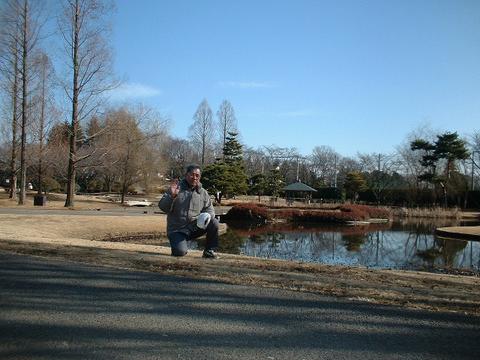
Below are some photos a relative of my wife sent me several years ago. He lives in Utsunomiya and the photos are from his city. I call him crazy in a funny way. He's a really goofy and entertaining guy who enjoys to have a beer. :)


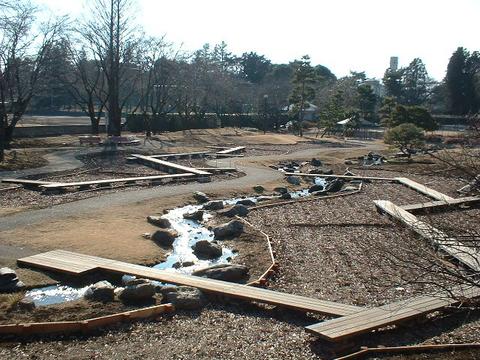
A park in Utsunomiya.


Here is a crazy man at a park in Utsunomiya.


Here's crazy Utsunomiya man enjoying some fine Utsunomiya water.


Here is crazy Utsunomiya man fishing at a local park. I wonder if he caught anything?


Here is crazy man's house. I wonder if he rides that scooter. If he does and you are ever in Utsunomiya, better watch out when you are on the street.


Here is crazy man's house in the summer.


Here is his house during the winter.

Wednesday, March 09, 2011

Zen psychology: Daisetz Suzuki remembered

Here is a very interesting article from the Japan Times about Daisetz Suzuki, a Zen Buddhist teacher, who died 55 years ago. D.T. Suzuki is one of the great Zen teachers in modern Japanese history.

Zen psychology: Daisetz Suzuki remembered

More than any other Eastern thinker in the 20th century, Suzuki catalyzed the rise of humanistic psychology, which has spurred today's interest in spirituality and well-being


By EDWARD HOFFMAN
Special to The Japan Times

Despite the gloomy global economy, the field of positive psychology is booming. Often described simplistically by journalists as "the science of happiness," it's actually a broad focus on our strengths and talents, virtues and peak experiences in daily living. The name for this specialty originated with Martin Seligman at the University of Pennsylvania a dozen years ago. With amazing speed, it has spawned courses at hundreds of colleges, best-selling books, websites and workshops on topics like mindfulness, and wide-ranging research on the links between mood and wellness.

News photo
Zen sage: The works of Daisetz Suzuki have inspired many in the West to study and learn from Eastern philosophy and Zen Buddhism. AP PHOTO

Yet, amid this flurry of excitement, it's shameful that so little credit is given to a key figure who helped shift the focus away from Sigmund Freud's gloomy fixations to a more optimistic view of human nature: Daisetz Teitaro Suzuki. More than any other Eastern thinker in the 20th century, he catalyzed the rise of humanistic psychology in the post-World War II era — and, indirectly, today's mounting interest in spirituality and inner well-being. As 2011 marks the 55th anniversary of Suzuki's death, the time is right to remember the remarkable man born in what's now Kanazawa, western Japan.

Suzuki was descended from a long line of physicians of the samurai class. He was expected to follow in their path, but when he was only 6, his father died and this goal became financially impossible. Academically gifted, he taught English in several small towns before initiating higher education at Tokyo Senmon Gakko (the predecessor of Waseda University) and the nonregular course at the Imperial University in Tokyo. But by his early 20s, Suzuki felt drawn to spiritual matters, and became a novitiate at the Engakuji Rinzai Zen monastery in Kamakura.

What was his motivation? As Suzuki later reminisced, "My thoughts (had) started to turn to philosophy and religion, and as my family belonged to the Rinzai sect of Zen, it was natural that I should look to Zen for some of the answers to my problems (about losing my father and our family's resulting poverty)."

At Engakuji, Suzuki's mentor, the aged Roshi (Zen master) Imagita Kosen, bestowed the Buddhist name Daisetz, meaning "great humility" on his pupil. Suzuki spent long hours in zazen (sitting meditation) and immersed himself in classic Zen texts. He was especially inspired by the "Zenkan Sakushin" (Whips to Drive You Through the Zen Barrier), an anthology of writings on Zen discipline and advice compiled by a Chinese master of the Ming dynasty. Decades later, Suzuki would vividly describe these formative years in his spiritual memoir, "The Training of A Buddhist Monk."

As he later reminisced, "In the way of moral effort, I used to spend many nights in a cave at the back of the Shariden building where the Buddha's tooth was enshrined. But there was always a weakness of willpower in me, so that I often failed to sit up all night in the cave, finding some excuse to leave, such as the mosquitoes."

Suzuki may have been exceptionally modest by temperament, but he was a brilliant linguist. Recognizing this talent was Roshi Kosen's cosmopolitan successor — Shaku Soyen, who arranged for young Suzuki to work near Chicago as a professional translator of Eastern texts for the Open Court publishing firm. There for 12 years, Suzuki enthusiastically introduced Americans to classic Chinese, Japanese, Pali and Sanskrit writings — starting with Taoism's seminal text, the "Tao Te Ching." In 1907, Suzuki authored his first book, "Outlines of Mahayana Buddhism," and thus began his subsequent, nearly 60-year career as a teacher and interpreter of Zen Buddhism to the West. During his stay in the U.S., he traveled widely including a visit to Europe — expanding his translation work and connecting with Theosophists and others interested in mystical teachings for the modern world.

News photo
Training ground: Daisetz Suzuki studied Zen at Engakuji monastery in Kamakura. YOSHIAKI MIURA PHOTOS

Late in his life, Suzuki insisted that he had never planned to spend so much time residing in the U.S., but "one year grew into the next and I wound up staying in America for more than a decade. After that, I traveled around Europe for a year before returning to Japan."

During this period, Suzuki also found time for romance. In 1911, he married Beatrice Erskine Lane, an American social worker eight years his junior drawn to Zen and Theosophy. By then, he was back in Japan as an English lecturer at the Imperial University, and they wedded in Yokohama. The two would adopt a son and collaborate on many literary projects until her death in 1939, for Lane was an accomplished scholar in her own right — whose lucid book on Mahayana Buddhism still remains in print after more than 70 years. Sharing her husband's interest in psychology, she devoted an entire chapter in this work to the Buddhist concept of personality — and poetically declared that "The only definite teaching to be found in Zen is that . . . every man is a sleeping Buddha. Consequently, (one) has but to awaken his heart of wisdom by meditation to gain a direct insight into the nature of reality."

The 1920s and 1930s marked Suzuki's most productive years. Joining the faculty of Otani University in Kyoto, he taught both English and Buddhist philosophy, and received an honorary doctorate in literature. During this period, his major books included "An Introduction to Zen Buddhism," "Essays in Zen Buddhism," "The Training of the Zen Buddhist Monk," his translation of the ancient Sanskrit Lankavatara Sutra, and especially "Zen and Its Influence on Japanese Culture."

These works came to influence several major psychological thinkers of the 20th century including Carl Jung, Erich Fromm and Karen Horney. For example, Jung was fascinated by Suzuki's description of the Zen experience of satori(enlightenment) and argued that it showed that we have higher stages of consciousness beyond the ego. For Fromm and Horney, Suzuki's work pointed the way to an exciting new understanding of personality growth and psychotherapy based on the notion of a "real self" that can be nurtured through authenticity and "whole-heartedness."

Fromm admired Suzuki's Zen teaching that we grow spiritually in life not by mere words and intellect, but by involving our entire being. At the time, of course, Freudianism was the dominant approach in Europe and the U.S., and had nothing to say about such matters.

During the interwar years, Suzuki's writings also helped modern Japanese to appreciate the impact of Zen thought on their own culture. For instance, in his preface to "The Training of the Zen Buddhist Monk," Suzuki asserted that "It is impossible, as I maintain, in the study of the Orient, especially in the study of Japanese character and culture, to neglect — much less to ignore — the influence of Zen. "In Zen and Its Influence on Japanese Culture," Suzuki described Zen's impact on four different, long-standing traditions in his country: painting, literature, swordsmanship and the tea ceremony. Each of these domains is worth noting, though space constraint here necessarily make these brief.

News photo
A temple room within Engakuji monastery where Suzuki is believed to have meditated.

Artistically, the Sumiye is a kind of sketch in black and white, involving ink composed of soot and glue, a brush of sheep's or badger's hair, and thin paper designed to absorb much ink. As Suzuki noted, such frail material was intentionally chosen to make sure that the artist's inspiration was transferred onto it in the quickest possible time — allowing for no erasing, retouching or remodeling. In this way, observed Suzuki, "Sumiye attempts to catch spirit as it moves" — thereby embodying the Zen principle that in life, "Everything becomes, nothing is stationery."

As for literature, the haiku is a special product of Japanese genius, according to Suzuki, developed in its highest form by the 17th-century Zen devotee Basho. How so? Because he freed haiku from mere wordplay and connected it to the experience of ultimate truth with such poems as "A frog jumps into the water. Hear the sound!"

As for swordsmanship, Suzuki contended that in feudal times, Japanese warriors were taught by Zen masters not to learn scholarly doctrines, but to develop a specific mental attitude: fearlessness before their possible death in battle. The 16th-century Zen master Takuan also taught his disciple Yagyu Tajima no Kami (swordsmanship teacher to the shogun of his day): "What is most important in the art of swordplay is to acquire . . . 'immovable wisdom.' 'Immovable' does not mean to be stiff and heavy . . . It means the highest degree of motility with a center which remains immovable . . . You must leave your mind free to make its own countermovement without your interfering deliberation."

Finally, Suzuki contended that the Japanese tea ceremony, so integral and favored part of its culture — and similar to other long-standing artistic activities as flower arranging — embodies the spirit of sabi by emphasizing such elements as simplicity, naturalness, refinement and "familiarity singularly tinged with aloofness and everyday commonness veiled exquisitely with the mist of transcendental inwardness."

Such insights by Suzuki helped to awaken broad Japanese interest in Zen Buddhism, especially as his reputation grew in the West.

When World War II erupted, Suzuki was under the suspicion of the Japanese government for his opposition to militarism. In his numerous wartime essays on Zen, he kept quiet about political matters, but in private letters as well as public speeches, he made clear his antiwar stance. For example, the day after Pearl Harbor was bombed, the 71-year-old Suzuki plunged Otani University's faculty meeting into uproar when he contended, "With this, Japan will be destroyed. What will destroy it is Shinto and the militarists."

Such shocking words, of course, proved prophetic — and in 1949, he was made a member of the Japan Academy and decorated by the emperor with the Order of Culture.

The postwar era marked the heyday of American Freudianism and its humanistic offshoots — and Suzuki, teaching Zen Buddhism at Columbia University in the 1950s, was at the epicenter of creative psychological thought. Only months before Horney's death in 1952, she accompanied Suzuki and colleagues on a tour of Japanese Zen monasteries and emphasized the importance of his notion of "whole-heartedness" as a vital feature of mental health. Fromm became close friends with Suzuki, and in 1957, sponsored him as a guest speaker for a conference on Zen and psychoanalysis held in Cuernavaca, Mexico. Several years later, the two coauthored an influential book on this topic; like many others, Fromm was greatly touched by Suzuki's personal warmth and kindness.

Abraham Maslow, guru of motivational psychology, was another humanistic thinker inspired by Suzuki during these years. Maslow, who pioneered in studying what he called "peak experiences" — that is, sudden moments of joy and meaning — was excited by Suzuki's concept of sono-mama or suchness, as an element of mystical awareness. Sponsoring Suzuki's lectures at Brandeis University, Maslow also regarded Suzuki's Zen teaching of muga, or total absorption, as vital for a psychology of well-being and growth.

It is an historical irony, though, that Suzuki had much less impact on Japanese psychology than on its humanistic development in the U.S. and Europe. Why so? Because during the postwar years, Japanese psychologists were eager to establish their field as a rigorous experimentalist science, akin to biology, and looked askance at philosophical or spiritual thinkers. As the Jungian scholar Dr. Shoji Muramoto of Kobe City University of Foreign Studies comments, "Unlike in the West, Suzuki's relevance to modern psychology has hardly been appreciated in Japan outside of a few journal articles. Nevertheless, he was perhaps the first Zen philosopher to deal with Zen as an object of academic study in its philosophical basis and psychological aspects, as well as its history."

After retiring from Columbia University in 1957, the elderly Suzuki returned to Japan, where he kept up an active, international schedule of writing, attending conferences, lecturing and receiving awards for his lifetime achievements.

Until his death in 1966 at age 95, he influenced a new generation interested in the relevance of Eastern thought — particularly Zen Buddhism — for contemporary civilization. For instance, his writings on Zen meditation later contributed to mindfulness training for health care professionals as a valued therapeutic tool — and now sponsored by dozens of medical schools in the U.S. and elsewhere.

As Suzuki astutely saw, the world was hungry for Eastern spiritual wisdom. His final words? "Don't worry. Thank you! Thank you!"

Tuesday, January 11, 2011

Sisters found dead in Osaka apartment fell from wealthy family into abject poverty - The Mainichi Daily News

Sad story. Japan is not the country many people in the rest of the world believe where there is no poverty. This is probably more common then we realize.

Sisters found dead in Osaka apartment fell from wealthy family into abject poverty - The Mainichi Daily News:

Sisters found dead in Osaka apartment fell from wealthy family into abject poverty


TOYONAKA, Osaka -- The two women found dead in an apartment here, with no food and only a pittance in cash, are thought to be two sisters who fell from a wealthy family to such abject poverty that one apparently starved to death.

The two are thought to be Kiyomi Okuda, 63, and her sister Kumiko, 61. No food was in the room's refrigerator, and only a meager 90 yen were found in a purse. A bank book in Kumiko's name showed a balance of zero yen since June of last year.

Autopsies showed that the two died one after the other on around Dec. 22 of last year, the older woman from heart disease. The younger woman's cause of death could not be determined, but weighing only 30 kilograms and showing evidence of malnutrition, starvation seems likely.

According to a 67-year-old male relative, the two sisters were single. Their parents were wealthy landowners, but their father died about 20 years ago, and a few years later their mother died as well. Neighbors say that the two sisters worked at jobs including as school office clerks until their late 40s and lived in their parents' house across from the apartment complex, and they were even the apartment complex's owners.

However, their house was later put up for auction, and the two moved into the apartment complex, where many of the rooms were empty.

"Even though they owned land, they may not have had any income. They seemed to have been in debt, and after they could no longer depend on their father's income, things were probably particularly hard," said the male relative.

Around three or four years ago, a former classmate of the younger sister noticed her limping and recommended she go to a hospital, but she said she couldn't afford to go, even though she wasn't well.

Last year in October, the older sister went to a housewife who lived nearby and begged for a loan of 10,000 yen. The housewife says she lent her the money and the older sister thanked her and said she would try to make the most of it.

"I knew that they were very poor, but I never imagined they would die this way," said the housewife.

According to sources from the city of Toyonaka, the sisters told an Osaka District Court official who had told them they had to evict that they "didn't know what to do" about their lives. Electricity and gas to the sisters' apartment was shut off in September of last year. Unable to reach the two women, the court official asked for advice from the city on how to meet with them.

In response, the city suggested going with police and entering the women's apartment, but the city did not provide local welfare workers with information on the women or otherwise take active steps to intervene.

"It is a terrible shame that they did not contact us for help," said a city official.

Tuesday, December 21, 2010

Tokyo residents the sleepiest people in the world

If you live in Tokyo than I know this is very familiar to you. This is an article from CNNGo.com.

public sleeping trains tokyoTwo passengers end up at the last stop on the JR Yamanote line which runs a one-hour loop around the city.


City dwellers in Tokyo get the least shuteye in the world, according to a survey from food company Ajinomoto.

It's not that Tokyoites are rising early -- citizens of Shanghai, New York, Paris, Stockholm and Tokyo all get up at an average of 6.40 a.m. It's the late-night drinking culture that's making our citizens drowsy.

public sleeping trains tokyo
A father sits beside two children sleeping on a bench in the shade at Toshimaen amusement park in Tokyo.


Shanghai advantage

As the only ones staying up after the stroke of midnight, respondents in Tokyo are hitting the pillow at 12.19 a.m. on average, compared to 10.20 p.m. in Stockholm, 10.38 p.m. in Shanghai and in New York, supposedly the city that never sleeps, people are doing just that by 11.15 p.m on average.

That means Tokyoites are sleeping an average of just five hours and 59 minutes each night, one and a half hours less than their Shanghai counterparts.

Forty-nine percent of respondents in Tokyo said they were unhappy with the situation, a sign that many still feel obliged to join late-night drinking sessions with colleagues. Only 29 percent were happy with their sleeping habits, compared to 68 percent in Shanghai.

The survey also revealed that commuting times were not to blame with Tokyo and New York posting the same results.

Friday, July 23, 2010

Yes I can Use Chopsticks

There is a website called Yes I Can Use Chopsticks that is from an American who teaches English in Fukushima Japan. I often read his online journal which describes his daily adventures and the silliness of certain aspects of Japanese culture. The way he writes about is daily experiences is often hilarious and below is a perfect example. I was cracking up at how he describes below how the school staff go crazy when the bread truck arrives at school.

"A truck selling bread just pulled up and everyone went F-ing crazy to go get some bread. SOME BREAD. Is it laced with heroin? I don’t know, but everyone truly goes crazy when this bread truck pulls up. They have come probably 100 times since I have been here and I have never understood it. They pull up, the office staff announces “the bread truck is here” and people literally scramble and trip over themselves to get out to it to buy…..bread. Simply bread that can be bought at the store. The only thing I can possibly imagine is they have some special contract with us and the teachers are showing their appreciation or something, but still it’s a bread truck. Now if the truck were made of bread, oh I’d run out to see that."

Thursday, July 01, 2010

Japanese castle ramparts constructed in California

I came across this website today called Stoneworld.com that has an interesting story regarding the construction of replica Japanese castle stone ramparts at a park here in California. The stone ramparts were constructed in January of this year in Ventura, a small city of about 100,000 people 2 hours north of Los Angeles. Master stonemasons came from Japan to California to supervise their North American counterparts in the construction of a traditional Japanese structure — castle ramparts — using ancient but still viable techniques.

They used nearly 400 tons of sandstone, a very common stone here in Southern California. This is different from the type of stone used in castle building in Japan which I believe is granite. If someone knows for sure the specific type of stone used in Japan, please let me know. The Japanese stonemasons used a traditional method of splitting the stones called mame-ya.

The article talks about Auchi castle, the magnificent castle built by the great warlord Oda Nobunaga at the height of his power. Azuchi was was of the grandest castles in Japanese history, rivaling or exceeding Osaka or Edo castle in grandeur. Oda Nobunaga is infamous for his destruction of the Buddhist temple complex on Mt. Hiei. The warrior monks from Mt. Hiei had long been a dangerous thorn in the side of Nobunaga. In 1571 Nobunaga dealt with the warrior monks in a most brutal way, laying waste to everything and everyone on Mt. Hiei, killing everyone who did not escape. However, Nobunaga did find something he truly appreciated on Mt. Hiei, very well built stone walls. The walls were apparently built by a community of stonemasons who lived at the foot of Mt. Hiei and known as the Anoh. The Anoh were originally brought from Korea to Japan in the 6th century and later it was the Anoh stonemasons who helped construct Nobunaga's Azuchi castle in 1579. Unfortunately for Nobunaga, he would be dead by 1582 and his beautiful castle burned to the ground after being completed only three years prior.


Azuchi Castle ruins


According the Stone World article, there still lives a family at the foot of Mt. Hiei who carry on the traditional way of stone working. Jyunji and Suminori Awata are father and son 14th and 15th generation stonemasons. The Awatas were even commissioned to help stabilize the stone rampart remains of Azuchi Castle according to the article. It was the Awata Construction Company that was incentive for the Ventura California project. The article has additional interesting information about the Awata's and their trade.

Tuesday, May 18, 2010

Twitter to become bigger in Japan


From TechCrunch:

Twitter is moving to grow in Japan. Softbank Mobile announced 13 new models in their cell phone lineup and all of them will come installed with Twitter. With these phones, you will be able to access Twitter via a pre-installed app or widget on the homescreen. According to the TechCrunch post, the Softbank CEO Masayoshi Son is a big fan of Twitter so this makes sense. Even more so since Masayoshi Son went to San Francisco at 16 where he finished high school and later graduated from the University of California Berkeley. He believes Japan is ready to become a Twitter country and Japan may already be number two in the world.

You can see a line-up of all of the 13 Twitter enable Softbank phones on the TechCrunch post.

Friday, May 07, 2010

Female Japanese knuckleballer lands in U.S.


From MSNBC.

This Japanese female knuckleballer, Eri Yoshida, is trying to make it into the big leagues in the United States. Good for her for trying. I think it is awesome.

But I don't think it will happen in a million years. She essentially has only one pitch, the knuckleball, and that just won't cut in the majors. Sorry Eri. But good for you for trying. If you make it on to the Dodgers someday I'll come out and watch you pitch (even though I hate baseball).

Sunday, May 02, 2010

Hideyoshi lives and he's ready to kick North Korean butt

Hashiba Hideyoshi in rubber boots in front of his missile arsenal. (Photo from viceland.com)

Kim jong-il and North Korea may have nukes but Japan can rest easy, Hashiba Hideyoshi is alive and well and ready to kick some North Korean ass should they ever attack Japan. Yes, the great 16th century unifier of Japan, better known as Toyotomi Hideyoshi, is living in Aoyama and has built an arsenal of ballistic missiles ready to launch at the slightest provocation. The modern Hideyoshi has even created his own feudal domain called Odagawa where he has built a small castle and of course a hot spring hotel.

Apparently Mr. Hideyoshi realized who he really was when he was a young man and was told by a priest that he was the reincarnation of Toyotomi Hideyoshi. He didn't think too much of it until later from reading about the real Hideyoshi, he realized what an impressive general he was. Now Mr. Hideyoshi wears samurai armor ready for battle while holding an assault rifle. He doesn't mind that people may think he is completely mad, he's just the resident crazy man. Hideyoshi moved to Aoyama and established his Odagawa Domain where he decided to dig for a hot spring and establish a hotel. It wasn't until later after hearing about North Korea's Taepodong missiles that threatened japan, that Hashiba Hideyoshi decided to build his own missile arsenal.

According to Mr. Hideyoshi, he has seven Patriot missiles (that don't fly) and a nuclear armed 'interplanetary' ballistic missile and another missile that he calls the "Super Fighter Hashiba 7". The Hashiba 7 apparently works if it is loaded with liquid oxygen and alcohol, although I wouldn't want to be in the area when Mr. Hideyoshi fired it up. Hideyoshi has even bigger dreams. He next plans to build two Aegis class warships and an aircraft carrier, the Odagawa Domain navy.

He also has a tank armed with cannons and missiles but Hashiba states that they don't fire real ammunition. If he did fire them, he states, he would be prosecuted much more severely than just a simple weapons violation.


Hideyoshi in rubber boots in front of his castle. (Photo from viceland.com)

I learned of the modern Hashiba Hideyoshi through the Samurai Archives and an article on Mr. Hashiba Hideyoshi from viceland.com.

Sunday, March 14, 2010

Japanese man killed by Light Saber

Kirainet, a blog I enjoy visiting often, periodically posts hilarious photos of sleeping Japanese. The two below are a couple of the funniest ones I've seen. The guy looks like he was killed in a light saber battle, possibly with Count Dooku.


Photos courtesy of Kirainet.com

Thursday, February 11, 2010

For Japan's cellphone novelists, proof of success is in the print - latimes.com

For Japan's cellphone novelists, proof of success is in the print - latimes.com: "One teenager who wrote a three-volume novel on her phone has gone on to sell more than 110,000 paperback copies, grossing more than $611,000 in sales."

Now we know why some people are constantly on their keitai and never look up, they are busy writing a novel.

Saturday, January 30, 2010

Jero in concert in LA


http://www.jaccc.org/events.htm

Jero (aka Jerome White) is coming to Los Angeles. The first African-American enka singer in Japanese (world?) history will be performing at the Japanese American Cultural and Community Center JACCC on March 31, 2010. Enka is a Japanese musical style that arose in the post-war years. I am not aware of any foreigner becoming a successful enka singer and it is even more unique with Jero's hip-hop style. Jero has become quite famous in Japan but I am not certain how well known he is here so I was surprised to hear he was playing a show in Los Angeles. Of course, the showing is at a theater in the Little Tokyo district in downtown LA so he may get a good turnout from the local Japanese-American community.

Sunday, October 18, 2009

Japan: Robot Nation

Below is an interesting program from current.com about Japan's rapidly aging and shrinking population. I found this program through Bartman905's blog "Konnichiwa". The program is 25 minutes long but it is very interesting. It doesn't just cover the use of robots in Japan but touches on the aspect of Japan's reluctance to increase foreign immigration as way to compensate for the shrinking population.

Wednesday, June 03, 2009

Tokyo Metro Courtesy Posters

These posters are hillarious. Here is the index of the funny and accurate Metro courtesy posters. My favorites are below:


I like how he is oblivious to his foot sticking in the ladies leg.


It should be obvious but there are dumb people like this on the LA subway also.


There are also a lot of idiots like this on the LA trains as well.


I see this on my LA train commutes also but they are always homeless people, never salarymen.


This is also common on LA trains but once again it is usually homeless people with several large and smelly bags.


This is the funniest one. This happens all the time on the Los Angeles subway. I have had to pry open the doors more then once to help someone stuck in the door.


Everyday. There are going to be a lot of deaf people in Los Angeles and Tokyo.


We don't have this problem on the Los Angeles subway. Only because there is not cell service in the tunnels.


This doesn't bother me so much.


Typical LA train rider.

Wednesday, May 13, 2009

Japanese Bra Counts Down to Wedding Day

May 13 from MSNBC: A Japanese bra maker has created a new garment that runs a digital timer, literally putting women seeking spouses on the clock.

I think this will have completely the opposite effect. Once a Japanese guy sees this bra, he will probably run the other way.


Saturday, January 17, 2009

Mishima


Last Weekend I watched the 1985 Japanese movie "Mishima, A Life in Four Chapters", directed by Paul Schrader and produced by Francis Ford Copola and George Lucas.

The movie is about the life of Yukio Mishima. Have you heard of Mishima? He was one of the most famous Japanese authors of the 20th century. I am not going to go in great detail about Mishima's life. Mishima had a very interesting, bizarre, strange, let's say, "unique" life. And the movie portrayed that well.

Mishima is most famous for what he did at the end of his life.

Picture this. Imagine one of the most famous writers, directors, actors, celebrities in your country. Imagine that this celebrity was extremely famous and unique, maybe a little bizarre, quirky, whatever, and this is probably why he or she was so talented. Then imgaine this very famous celebrity, in an effort to change things or change his country, committed a most extreme and bizarre public suicide.

This is what Mishima did. Mishima wanted to bring Japan back to where it was before WW II. He wanted Japan to revere the Emperor again. He wanted the Emperor to regain control. In 1970, at the age of 45, Mishima went to a military base in Tokyo to meet with a general. The general assumed it was a normal social call. But when Mishima and some followers showed up for the meeting, they quickly tied up the general and demanded that the base soldiers assemble in front of the building.

Mishima climbed out on to the second floor balcony to give a patriotic speach to the soldiers pleading with them to join him in restoring Japan and restoring the Emperor. But the soldiers jeered and heckled him. Police and news helicopters circled overhead drowning out Mishima's voice.

Dejected, Mishima climbed back into the room where the general was being held. He kneeled on the floor, removed his shirt, pulled out a knife, and committed seppuku, plunging the knife into his belly. Done exactly the same way as the samurai did centuries before in old Japan before the Meiji Restoration.

It was the duty of one of Mishima's followers to act as Mishima's Second, to cut off Mishima's head after Mishima cut open his belly. But his Second was terrified and began shaking terribly. After Mishima cut his belly, his Second attempted to cut off Mishima's head. But he missed his neck. Instead slicing into his shoulder. The Second tried again, but he was off the mark again and hit Mishima's jaw with the samarai sword blade cutting into his jawbone. (These suicide events were not depicted in the movie but come from a book I am currently reading about Mishima).

Finally, one of the other followers took the sword and with one swing cut off Mishima's head. Then, as was planned, he cut off the head of Mishima's Second.

This was a good movie. If you are familliar with Mishima's story, then I recommend this film. Also, I recommend reading the book, "Mishima's Sword, Travels in Search of a Samurai Legend", especially if you are not familiar with his story. I am currently reading this book which was written by Christopher Ross.

Monday, January 05, 2009

Japan is so interesting

Japan is so interesting to me.  Why is Japan so interesting? Maybe it is because it is the only real "foreign" country I have ever been to. I have been to Mexico. But living in Califonia, Mexico is really not very foreign. I have been to Canada. But come on. Is Canada really that different then the United States, other then being able to watch Seinfeld in French, it really is not that different.

Japan is just so different to me.

I consider myself a very observent and visual person. I like to see things. When in Japan, I notice very clearly the most unique things that I have never seen before in California. The Buddhist temples. The Shinto shrines and their torii gates. The Shinkansen rocketing above the rice fields in Tochigi. 

But I also notice the most minute things that are still so different and interesting to me. The family restaurants like Flying Garden seem the same, but they're not. 

The cinder block walls that surround so many homes seem the same as back home in California. But they're not, they are different. They are narrower. They are slightly covered in a black mildew from Japan's humid and wet environment. They are just not the same.

The employees who shout out their greeting as you enter the store, like UNIQLO, and hand you your change on a little tray in the most polite manner you will rarely see in Los Angeles.

How everyone backs their cars into their parking slots in the parking lot at the local Tobu or Aeon shopping center.

Who cares about the cinder block walls, or how Japanese people park their cars, or how they greet you in stores.

But to me it is these little, and big, things, that make me so excited and interested everytime I visit Japan.

Thursday, December 11, 2008

Crazy pictures of crazy Japanese people

If you have followed or lived in Japan for a while, you have probably seen many crazy and disturbing pictures or witnessed firsthand some pretty bizarre "only in Japan" things.  Paul Hartrick over at paulhartrick.com has posted some pretty funny AND disturbing pictures of people in Japan.  Definitely some of the most hilarious and bizarre pictures I have seen yet and I have seen some pretty strange people in Japan.

The eyelash lady reminds me of some horror movie like Sadako from Ringu.