Daibutsu, Kamakura

Daibutsu in Kamakura, June 2010. There were thousands of school kids visiting that day. It was still great fun.
Thursday, January 12, 2012


Wednesday, March 09, 2011
Zen psychology: Daisetz Suzuki remembered
Zen psychology: Daisetz Suzuki remembered
More than any other Eastern thinker in the 20th century, Suzuki catalyzed the rise of humanistic psychology, which has spurred today's interest in spirituality and well-being
Despite the gloomy global economy, the field of positive psychology is booming. Often described simplistically by journalists as "the science of happiness," it's actually a broad focus on our strengths and talents, virtues and peak experiences in daily living. The name for this specialty originated with Martin Seligman at the University of Pennsylvania a dozen years ago. With amazing speed, it has spawned courses at hundreds of colleges, best-selling books, websites and workshops on topics like mindfulness, and wide-ranging research on the links between mood and wellness.
 |
| Zen sage: The works of Daisetz Suzuki have inspired many in the West to study and learn from Eastern philosophy and Zen Buddhism. AP PHOTO |
Yet, amid this flurry of excitement, it's shameful that so little credit is given to a key figure who helped shift the focus away from Sigmund Freud's gloomy fixations to a more optimistic view of human nature: Daisetz Teitaro Suzuki. More than any other Eastern thinker in the 20th century, he catalyzed the rise of humanistic psychology in the post-World War II era — and, indirectly, today's mounting interest in spirituality and inner well-being. As 2011 marks the 55th anniversary of Suzuki's death, the time is right to remember the remarkable man born in what's now Kanazawa, western Japan.
Suzuki was descended from a long line of physicians of the samurai class. He was expected to follow in their path, but when he was only 6, his father died and this goal became financially impossible. Academically gifted, he taught English in several small towns before initiating higher education at Tokyo Senmon Gakko (the predecessor of Waseda University) and the nonregular course at the Imperial University in Tokyo. But by his early 20s, Suzuki felt drawn to spiritual matters, and became a novitiate at the Engakuji Rinzai Zen monastery in Kamakura.
What was his motivation? As Suzuki later reminisced, "My thoughts (had) started to turn to philosophy and religion, and as my family belonged to the Rinzai sect of Zen, it was natural that I should look to Zen for some of the answers to my problems (about losing my father and our family's resulting poverty)."
At Engakuji, Suzuki's mentor, the aged Roshi (Zen master) Imagita Kosen, bestowed the Buddhist name Daisetz, meaning "great humility" on his pupil. Suzuki spent long hours in zazen (sitting meditation) and immersed himself in classic Zen texts. He was especially inspired by the "Zenkan Sakushin" (Whips to Drive You Through the Zen Barrier), an anthology of writings on Zen discipline and advice compiled by a Chinese master of the Ming dynasty. Decades later, Suzuki would vividly describe these formative years in his spiritual memoir, "The Training of A Buddhist Monk."
As he later reminisced, "In the way of moral effort, I used to spend many nights in a cave at the back of the Shariden building where the Buddha's tooth was enshrined. But there was always a weakness of willpower in me, so that I often failed to sit up all night in the cave, finding some excuse to leave, such as the mosquitoes."
Suzuki may have been exceptionally modest by temperament, but he was a brilliant linguist. Recognizing this talent was Roshi Kosen's cosmopolitan successor — Shaku Soyen, who arranged for young Suzuki to work near Chicago as a professional translator of Eastern texts for the Open Court publishing firm. There for 12 years, Suzuki enthusiastically introduced Americans to classic Chinese, Japanese, Pali and Sanskrit writings — starting with Taoism's seminal text, the "Tao Te Ching." In 1907, Suzuki authored his first book, "Outlines of Mahayana Buddhism," and thus began his subsequent, nearly 60-year career as a teacher and interpreter of Zen Buddhism to the West. During his stay in the U.S., he traveled widely including a visit to Europe — expanding his translation work and connecting with Theosophists and others interested in mystical teachings for the modern world.
 |
| Training ground: Daisetz Suzuki studied Zen at Engakuji monastery in Kamakura. YOSHIAKI MIURA PHOTOS |
Late in his life, Suzuki insisted that he had never planned to spend so much time residing in the U.S., but "one year grew into the next and I wound up staying in America for more than a decade. After that, I traveled around Europe for a year before returning to Japan."
During this period, Suzuki also found time for romance. In 1911, he married Beatrice Erskine Lane, an American social worker eight years his junior drawn to Zen and Theosophy. By then, he was back in Japan as an English lecturer at the Imperial University, and they wedded in Yokohama. The two would adopt a son and collaborate on many literary projects until her death in 1939, for Lane was an accomplished scholar in her own right — whose lucid book on Mahayana Buddhism still remains in print after more than 70 years. Sharing her husband's interest in psychology, she devoted an entire chapter in this work to the Buddhist concept of personality — and poetically declared that "The only definite teaching to be found in Zen is that . . . every man is a sleeping Buddha. Consequently, (one) has but to awaken his heart of wisdom by meditation to gain a direct insight into the nature of reality."
The 1920s and 1930s marked Suzuki's most productive years. Joining the faculty of Otani University in Kyoto, he taught both English and Buddhist philosophy, and received an honorary doctorate in literature. During this period, his major books included "An Introduction to Zen Buddhism," "Essays in Zen Buddhism," "The Training of the Zen Buddhist Monk," his translation of the ancient Sanskrit Lankavatara Sutra, and especially "Zen and Its Influence on Japanese Culture."
These works came to influence several major psychological thinkers of the 20th century including Carl Jung, Erich Fromm and Karen Horney. For example, Jung was fascinated by Suzuki's description of the Zen experience of satori(enlightenment) and argued that it showed that we have higher stages of consciousness beyond the ego. For Fromm and Horney, Suzuki's work pointed the way to an exciting new understanding of personality growth and psychotherapy based on the notion of a "real self" that can be nurtured through authenticity and "whole-heartedness."
Fromm admired Suzuki's Zen teaching that we grow spiritually in life not by mere words and intellect, but by involving our entire being. At the time, of course, Freudianism was the dominant approach in Europe and the U.S., and had nothing to say about such matters.
During the interwar years, Suzuki's writings also helped modern Japanese to appreciate the impact of Zen thought on their own culture. For instance, in his preface to "The Training of the Zen Buddhist Monk," Suzuki asserted that "It is impossible, as I maintain, in the study of the Orient, especially in the study of Japanese character and culture, to neglect — much less to ignore — the influence of Zen. "In Zen and Its Influence on Japanese Culture," Suzuki described Zen's impact on four different, long-standing traditions in his country: painting, literature, swordsmanship and the tea ceremony. Each of these domains is worth noting, though space constraint here necessarily make these brief.
 |
| A temple room within Engakuji monastery where Suzuki is believed to have meditated. |
Artistically, the Sumiye is a kind of sketch in black and white, involving ink composed of soot and glue, a brush of sheep's or badger's hair, and thin paper designed to absorb much ink. As Suzuki noted, such frail material was intentionally chosen to make sure that the artist's inspiration was transferred onto it in the quickest possible time — allowing for no erasing, retouching or remodeling. In this way, observed Suzuki, "Sumiye attempts to catch spirit as it moves" — thereby embodying the Zen principle that in life, "Everything becomes, nothing is stationery."
As for literature, the haiku is a special product of Japanese genius, according to Suzuki, developed in its highest form by the 17th-century Zen devotee Basho. How so? Because he freed haiku from mere wordplay and connected it to the experience of ultimate truth with such poems as "A frog jumps into the water. Hear the sound!"
As for swordsmanship, Suzuki contended that in feudal times, Japanese warriors were taught by Zen masters not to learn scholarly doctrines, but to develop a specific mental attitude: fearlessness before their possible death in battle. The 16th-century Zen master Takuan also taught his disciple Yagyu Tajima no Kami (swordsmanship teacher to the shogun of his day): "What is most important in the art of swordplay is to acquire . . . 'immovable wisdom.' 'Immovable' does not mean to be stiff and heavy . . . It means the highest degree of motility with a center which remains immovable . . . You must leave your mind free to make its own countermovement without your interfering deliberation."
Finally, Suzuki contended that the Japanese tea ceremony, so integral and favored part of its culture — and similar to other long-standing artistic activities as flower arranging — embodies the spirit of sabi by emphasizing such elements as simplicity, naturalness, refinement and "familiarity singularly tinged with aloofness and everyday commonness veiled exquisitely with the mist of transcendental inwardness."
Such insights by Suzuki helped to awaken broad Japanese interest in Zen Buddhism, especially as his reputation grew in the West.
When World War II erupted, Suzuki was under the suspicion of the Japanese government for his opposition to militarism. In his numerous wartime essays on Zen, he kept quiet about political matters, but in private letters as well as public speeches, he made clear his antiwar stance. For example, the day after Pearl Harbor was bombed, the 71-year-old Suzuki plunged Otani University's faculty meeting into uproar when he contended, "With this, Japan will be destroyed. What will destroy it is Shinto and the militarists."
Such shocking words, of course, proved prophetic — and in 1949, he was made a member of the Japan Academy and decorated by the emperor with the Order of Culture.
The postwar era marked the heyday of American Freudianism and its humanistic offshoots — and Suzuki, teaching Zen Buddhism at Columbia University in the 1950s, was at the epicenter of creative psychological thought. Only months before Horney's death in 1952, she accompanied Suzuki and colleagues on a tour of Japanese Zen monasteries and emphasized the importance of his notion of "whole-heartedness" as a vital feature of mental health. Fromm became close friends with Suzuki, and in 1957, sponsored him as a guest speaker for a conference on Zen and psychoanalysis held in Cuernavaca, Mexico. Several years later, the two coauthored an influential book on this topic; like many others, Fromm was greatly touched by Suzuki's personal warmth and kindness.
Abraham Maslow, guru of motivational psychology, was another humanistic thinker inspired by Suzuki during these years. Maslow, who pioneered in studying what he called "peak experiences" — that is, sudden moments of joy and meaning — was excited by Suzuki's concept of sono-mama or suchness, as an element of mystical awareness. Sponsoring Suzuki's lectures at Brandeis University, Maslow also regarded Suzuki's Zen teaching of muga, or total absorption, as vital for a psychology of well-being and growth.
It is an historical irony, though, that Suzuki had much less impact on Japanese psychology than on its humanistic development in the U.S. and Europe. Why so? Because during the postwar years, Japanese psychologists were eager to establish their field as a rigorous experimentalist science, akin to biology, and looked askance at philosophical or spiritual thinkers. As the Jungian scholar Dr. Shoji Muramoto of Kobe City University of Foreign Studies comments, "Unlike in the West, Suzuki's relevance to modern psychology has hardly been appreciated in Japan outside of a few journal articles. Nevertheless, he was perhaps the first Zen philosopher to deal with Zen as an object of academic study in its philosophical basis and psychological aspects, as well as its history."
After retiring from Columbia University in 1957, the elderly Suzuki returned to Japan, where he kept up an active, international schedule of writing, attending conferences, lecturing and receiving awards for his lifetime achievements.
Until his death in 1966 at age 95, he influenced a new generation interested in the relevance of Eastern thought — particularly Zen Buddhism — for contemporary civilization. For instance, his writings on Zen meditation later contributed to mindfulness training for health care professionals as a valued therapeutic tool — and now sponsored by dozens of medical schools in the U.S. and elsewhere.
As Suzuki astutely saw, the world was hungry for Eastern spiritual wisdom. His final words? "Don't worry. Thank you! Thank you!"
Wednesday, September 15, 2010
Pasadena teahouse sent to Japan for restoration, then returned to America

A Pasadena teahouse, falling on hard times, will be sent to Japan for restoration, then return to grace a new garden at the Huntington Library.
By Teresa Watanabe, Los Angeles Times
September 12, 2010
Japan's Grand Master of the Phoenix Cloud visited Los Angeles four decades ago and dedicated an exquisite teahouse to the public in the hopes of popularizing the sublime art of tea ceremony in the West.
Trained as a kamikaze pilot during World War II, the grand master saw tea as a way to promote peace, share Japan's cultural treasures and repair a national image battered by wartime militarism. The 400-year-old art expresses the values of harmony, respect, purity and tranquillity through the highly refined and ritualized making and serving of tea.
But the ceremony failed to catch on much beyond a small circle of Japanese Americans. The teahouse, given to the Pasadena Buddhist Church, declined in use. Termites began attacking the wood and paper structure, and the elderly couple who cared for the teahouse for decades no longer could do so.
The Huntington Library, Art Collections and Botanical Gardens in San Marino has stepped in to rescue the teahouse as part of an ambitious $6.7-million project to restore its Japanese garden and develop an authentic tea garden. In collaboration with the grand master's Urasenke School and the Buddhist church, the Huntington hopes to use the teahouse to expose the art to a broader swath of society and develop a premier program for Asian garden arts, including the tea ceremony, flower arranging, bonsai and stone viewing.
James Folsom, the Huntington's botanical gardens director, said the ancient Japanese art is as relevant to Americans today as it was to the Zen monks and warring samurai who practiced it four centuries ago.
"When life is so hectic, when you're rushing around looking at e-mails, how do you remind yourself to stop and be human again?" Folsom said. "The tea ceremony reminds us to step out of that, to appreciate silence and tranquillity in the presence of others and to enjoy the beauty of the moment. We would hope that tea helps lead people to a change in their own lives."
The Urasenke Tankokai Los Angeles Assn. offered a farewell bowl of tea to several guests in the Pasadena teahouse. The house, designed by the grand master's brother, Sen Mitsuhiko, is a light and airy structure featuring woven bamboo ceilings, white papered shoji screens, bamboo tatami mats and the all-important alcove displaying the day's carefully selected Japanese scroll, vase and flower arrangement.
The gathering's hostess, Soen Clarkson, performed the tea ceremony's ritualized acts: First, fold a silk cloth to wipe the tea caddy and tea scoop. Place the powdered green tea in a specially selected bowl. Pour in water heated over a charcoal brazier. Whip the mixture into a froth with a bamboo whisk. Then, offer it to the guests along with Japanese sweets.
As the guests sipped tea, Robert Hori, vice president of Urasenke's Los Angeles chapter and director of advancement at the Japanese American Cultural & Community Center, explained his choices in selecting the various accoutrements for the occasion. The careful consideration of such items is part of the tea ceremony's spirit of hospitality as the host aims to capture the gathering's treasured and irreplaceable moment.
The boat-shaped vase pointing outward symbolized the teahouse's departure from the Pasadena church, he said. A Rose of Sharon and bush clover, both short-lived blooms, reflect the transiency of life. The scroll of Japanese calligraphy was used when the grand master dedicated the teahouse, named the Arbor of the Pure Breeze, in Pasadena in 1965.
And for the day's tea scoop, Hori selected a utensil named "gratitude."
"We're really grateful for the opportunity to give the teahouse a new life," he said. "It's the end and it's the beginning."
Tea was first taken to Japan from China by a Buddhist monk in the 9th century. But it was not until the 16th century that Sen Rikyu perfected the Way of Tea by incorporating into it Zen elements of simplicity and oneness with nature. By designing a teahouse with an entrance forcing guests to lower their heads and crawl through, the tea master also sought to eliminate social distinctions.
Fourteen generations later, Sen's direct descendent, Tantansai — the Grand Master of Purity and Serenity — served tea to American Occupation forces in Japan. That, in turn, inspired his son Hounsai to move beyond his military training and lingering disdain for Americans and dedicate his life to international harmony through tea. In 1965, he visited the United States to officially dedicate the teahouse his father had bequeathed to the church.
Sosei Matsumoto, a 90-year-old tea master lauded for her accomplishments by President Clinton and the emperor of Japan alike, was the first to teach tea ceremony in the new Pasadena teahouse. The structure, she recalled Sunday, was used for classes every week, with special tea ceremonies for New Year's and the summer Obon festival honoring ancestors.
But the Pasadena tea group failed to expand and dwindled to about seven students, said Yaeko Sakahara, also 90, who took over the classes from Matsumoto more than three decades ago. One of the major obstacles, she and others said, is the traditional requirement to sit on bamboo mats with legs folded under, a position that can turn legs numb after a few minutes. Tea ceremonies can last from 20 minutes to four hours.
Another obstacle to sustaining interest in tea is growing acculturation among younger generations of Japanese Americans, said Irene Takemori, Pasadena temple president.
"The younger generation is more interested in sports and don't have a lot of time for this cultural stuff," Takemori said. "It's really a shame, because it's such a beautiful experience to drink tea and find peace of mind."
When health issues began to preoccupy Sakahara, the teahouse's future hung in the balance.
Enter the Huntington. The renowned cultural institute had been looking for a Japanese teahouse after one of its donors, Mary B. Taylor Hunt, bequeathed a $2.6-million endowment for an authentic Japanese tea garden and related cultural programs. The Huntington's nine-acre Japanese garden, designed by founder Henry Huntington and William Hertrich, reflects a Western interpretation of Japanese aethestics but is not considered authentic, Folsom said.
After months of consideration, the Pasadena Buddhist Church decided earlier this year to donate the teahouse, clearing the way for the transfer.
The Huntington plans to close the current Japanese garden next year for several months of renovation, including restoration of its ponds and a traditional Japanese house. The new two-acre garden will be installed behind the house, along with the Pasadena teahouse. The grand reopening is expected to occur in 2012, in time for the garden's centennial anniversary, Folsom said.
This week, carpenters from Japan are scheduled to fly to Los Angeles and begin dismantling the teahouse. The pieces will be shipped to Kyoto, restored, then sent back to the Huntington.
Folsom said the Huntington, working with the region's tea schools and the Buddhist church, will seek to popularize the Japanese art, possibly using more ceremonial forms that allow practitioners to sit in chairs rather than on folded legs, among other ideas.
For the longtime guardians of the teahouse, Sunday's farewell was bittersweet.
"The teahouse has been an integral part of the temple, so it's a little sad to have it depart," Takemori said. "But it's in the best public interest and for the best use of the teahouse."

Friday, March 26, 2010
150th Anniversary of 1st Japanese Embassy to America
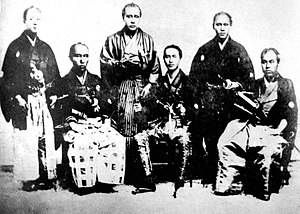
Newspapers reported on the visit to the smallest of details and reflected on the popular view of the time at how awed these visitors would be as they encountered Western civilization and American progress. However, that outlook changed when the stately, and always polite, Japanese ambassadors occasionally encountered rowdy crowds who mobbed them to get a glimpse of the exotic Japanese. Dismayed by these unseemly popular displays, some editorials began asking just who was really more "civilized".

Monday, March 15, 2010
Toyota casts doubt on runaway Prius claim
Toyota said in a statement that the accelerator pedal was tested and found to be working normally and a backup safety system worked properly. The automaker said the front brakes showed severe wear and damage from overheating, but the rear brakes and parking brake were in good condition."
Wednesday, March 10, 2010
Are you ready for the toilet of the future?

Are you ready for the toilet of the future? - Innovation- msnbc.com
Terca says she found Japan’s smart toilets both “hilarious” and somewhat perplexing, since not all toilets offer the same snazzy features — including a special deodorizing feature that she says she never figured out.
Mary, a 53-year-old business consultant from Manhattan, says the special sound effects were what threw her for a loop. “I went to see my client and had to use the bathroom and as soon as I sat down, there was this sound,” she says. “In retrospect, I realized it was a rainforest or some nature sound to give you your privacy, but at the time it sounded like applause." (MSNBC)
Saturday, January 30, 2010
Jero in concert in LA

http://www.jaccc.org/events.htm
Friday, January 29, 2010
Authentic? samurai armor


Friday, October 23, 2009
Zenshuji Temple, Los Angeles

 Kannon is the Buddhist bodhisattva of compassion or goddess of mercy. Kannon is often pictured next to Amida Buddha. In the crown on Kannon can be seen an image of Amida Buddha who was Kannon's spiritual teacher before Kannon became a Bodhisattva. Amida Buddha is the principal Buddha of the Pure Land sect
 Above are six Jizo statues outside Zenshuji. Jizo is also a Bodisattva and the name is translated as "Earth Treasury", "Earth Store", or "Earth Womb". Jizo is known for his vow not to achieve Buddhahood until all the various hells are emptied. In Japan, Jizo is one of the most beloved of deities and you will see Jizo statues all over Japan. Jizo is considered the guardian of children and travelers but there are actually dozens of other various Jizo's who provide protection for many different people. Since Jizo is the savior of souls, you will often find him in cemeteries in Japan. Also, since he provides protection to travelers, Jizo is a common site along the roadsides of Japan.
 A large lantern outside Zenshuji temple.
View Larger Map
Monday, September 21, 2009
Shugyo Daishi


 Below is what someone from the Samurai Archives provided. Very interesting.
北米開教 百年記念
hokubei kaikyô hyakunen kinen
Hundred-Year Anniversary of the Opening of the Teaching in North America.
The left side refers to the 4th (第4) completion (成満) of the Shikoku pigrimage (四国通路), and then lists two names: Kurata Yasuo and Tomoko (倉田康男、智子), as donors or benefactors (施主).
The last line names the head of the temple (I guess):
Leader (先達) of this branch temple (別院), 7th generation (第七世) Abbot (大僧正)... and then it gives the abbot's name 諦詮。
The right side names the temple: Koya-san (高野山) US (米国) Branch Temple (別院), followed by what I assume is another name:
Eighth Generation (大八世) Asahi (旭)Kiyosumidai (清澄代).
Friday, April 24, 2009
Japanese cars
However, over the last few years, there have been several cars introduced to America that I had previously seen on the streets of Japan.
A few years ago, the Honda Fit was introduced to the States. I remember seeing it during my visits to Japan in 2004 and shortly after that Honda began selling it in America. I see a lot of Fits on the road here in Los Angeles.
Fit


Scion xB


Wednesday, March 11, 2009
Japanese Shingon Buddhism

This is a picture of the Koyasan Buddhist Temple in Los Angeles.
The Temple serves as the North American regional headquarters of Koyasan Shingon School of Buddhism (Vajrayana Tradition) and its main headquarters is located at Koyasan, Wakayama Prefecture in Japan.
The Koyasan temple in Los Angeles was established by Rev. Shutai Aoyama in 1912. Later, the current temple was constructed at the present site in Little Tokyo on First Street. It was elevated to the Koyasan Beikoku Betsuin in 1940.
Periodically I stop by the temple to look at the Jizo and Kannon statues in the front of the temple. I also read the information on a bulletin board they have near the entrance. A notice on the board said that recently the Japanese actor Ken Watanabe visited this Los Angeles Shingon temple. While I was there, a monk handed me a small brochure describing the temple and Shingon buddhism. Below is from the brochure I received.
The Teaching of Shingon Buddhism
Shingon or True Word Buddhism proclaims as its core teaching the vows:
1. May we realize Buddhahood in this very life.
2. May we dedicate ourselvesto the well-being of all people.
3. May we establish the World of Buddha on this Earth.
Appearing in Northern India in the 4th century, the Vajrayana Tradition traveled through China. Kobo Daishi, a Japanese monk, went to China to study with the great Buddhist masters. He returned to Japan in 806 as the inheritor and propagator of esoteric Buddhism known as Shingon.
Shingon teaching advocates that Buddhahood is attainable by everyone in this life. Kobo Daishi proclaimed that one does not have to be a monk or wait countless lifetimes to realize enlightenment. The freedom can be attained here and now through wisdom if one simply makes the decision to be free. In other words, by intending to make every breath, word, and action a realization of the Truth, one can reach the final goal/freedom and accomplish one's mission.
The goal of Shingon Buddhism is the realization that our own mind is the same as the Buddha mind. In other words, it is the way of knowing self-nature directly. All existence is aspects of the creative nature of the universe symbolized by Dainichi Nyorai in Japanese. Since the human mind is an aspect of this Ultimate Truth, we have the Buddha-mind within our mind. There is no need to seek enlightenment outside our self. We simply need to look into our own mind to realize enlightenment while we are living. This teaching is called "Sokushin Jobutsu" in Japanese or becoming a Buddha in this very life.
Kobo Daishi
Kobo Daishi, the founder of Shingon Buddhism, was born in the town of Zentsuji in Kagawa Prefecture in 774. He became a monk when he was 19 and went to China to study esoteric Buddhism when he was 31. He mastered Esoteric teaching from the Chinese master Hui-kuo, the 7th century patriarch of Esoteric Buddhist tradition. When Kobo Daishi returned to Japan, he established Shingon Buddhism and propagated its teaching throughout his lifetime. The Emperor Saga granted him land at Koyasan (Mt. Koya) as a place to establish a monastic center in 816.
Kobo wrote several influential teachings and commentaries such as, "The Secret Key to the Heart Sutra," "The Difference Between Exoteric and Esoteric Buddism," "Attaining Enlightenment in This Very Existence," and "The Ten Stages of the Development of the Mind." Twelve hundred years later, these texts continue to enlighten seekers throughout the world.
Kobo Daishi visited many temples throughout Japan. Many of these temples are now part of a Kobo Daishi pilgrimage which I posted about here previously.
Monday, February 09, 2009
Cool Umbrella

Sunday, January 11, 2009
I am John Manjiro

Have you heard of John Manjiro? He is somewhat famous in Japan.
In 1841 at the age of 14, John Manjiro, whose fishing vessel was wrecked in Ashizuri-oki, landed on Torishima Island, where he was rescued by a U.S. whaler ship and brought to America.
Manjiro, taking the name "John Manjiro," was welcomed by the citizens of Fairhaven and New Bedford Massachusetts where he disembarked. He became the first Japanese student to receive an American elementary and intermediate education as well as a high school education in English, Mathematics, Navigation and Shipbuilding, History, and Geography. He also acted as First Mate on a whaling ship's 40-month journey around the world.
At 24, his thoughts turning to the importance of opening Japan and to his mother, he resolved to return to closed Japan, even at the pain of death. He departed Hawaii and landed in the Ryukyu Islands in 1851. Undergoing investigation there, he then went further in the Ryukyus and on to Nagasaki and Tosa, where he was repeatedly interrogated for the crime of contravening the nation's policy of isolation. He was finally permitted to return to his home in Nakanohama in October of 1852, and mother and son enjoyed a moving reunion after their 12-year separation.
Manjiro had the dream of appealing directly to the Shogun and becoming a force for the opening of Japan, but the urgency of the times demanded the technical and general knowledge that Manjiro had brought from America. Manjiro had just three days and nights with his mother before he was called back by Yamanouchi Yodo, Lord of the Tosa Domain. He became a teacher at the Tosa School, lecturing on American democracy, on freedom and equality, and it is said that he greatly influenced Sakamoto Ryoma and Goto Shojiro.
There are some books on John Manjiro that I plan to read so I may write a little more about this man who was one of the inspirations for Sakamoto Ryoma.
Saturday, December 20, 2008
Japanese seek to scrap Google's Street View
A group of Japanese journalists, professors and lawyers demanded Friday that the US Internet search giant Google scrap its "Street View" service in Japan, saying it violates people's privacy.
Google launched Street View in the United States last year, providing pictures of panoramic all-around street-level views at locations on its online maps.
The service was expanded to 12 major cities in Japan in August and six cities in France in October.
The group said it sent a petition to Google's Japanese subsidiary, demanding an end to the Street View service in Japan.
They wrote that Street View "constitutes violent infringement on citizens' privacy by photographing residential areas, including community roads, and publishing their images without the consent of communities and citizens."
They complained that via the Internet, Street View was distributing private information "more easily, widely, massively and permanently than ordinary cameras and surveillance cameras do."
Local municipalities in Tokyo and Osaka have already appealed to the national government to take action against the site.
The Google Japanese unit earlier said it was blurring the faces of people seen in Street View scenes by special technology and that it would delete the pictures of people and buildings upon request.
Japan has stricter protections on privacy in public than in the United States, with Japanese able to stop their pictures from being used against their will.
Thursday, December 18, 2008
Atsuhime's palanquin in Washington D.C.

Princess Atsu's (Atsuhime) palanquin will be displayed at the Sackler Gallery of Art in Washington D.C. Palanquins were used as transportation during the Tokugawa period of Japanese history, which ended in 1868. High-ranking Japanese nobility sat in the fancy compartments, and as many as six bearers carried it through the streets.
The palanquin was purchased in 1984 by curator Ann Yonemura. Yonemura knew that the palanquin belonged to a high-ranking noblewoman, since only the elite were permitted such rich transportation. But it wasn’t until this year, as reported in the January issue of Smithsonian magazine, that she figured out who the palanquin was made for.
A document found in the Japanese National Archives listed the items that had been made for the 1856 marriage between shogun Tokugawa Iesada and Princess Atsuhime. She would have sat in it, and six bearers would have carried her through the streets from her parents’ home to her new husband’s.
But Atsuhume was more than just a shogun’s third wife. Her husband died two years after their marriage, making her a widow at 23. Undaunted, Atsuhime renamed herself Tenshoin. When the Tokugawa clan resigned the shogunate and imperial rule resumed, Princess Atsuhime remained a force in politics, advancing her family’s position. Her life spanned the birth of a modern, powerful Japan. Atsuhime’s fascinating story is the subject of a 50-episode drama, currently airing on the Japanese public TV network NHK.
Below is description of the upcoming exhibition at the Sackler Gallery of Art from the museum website:
A SHOGUN'S WEDDING: PRINCESS ATSUHIME'S PALANQUIN*
March 21–April 9, 2009
Freer Gallery of Art
In 1856 Princess Atsuhime married Tokugawa Iesada (1824–58), the thirteenth shogun of the Tokugawa family that ruled Japan from 1603 to 1867. The princess rode in this Japanese ceremonial palanquin, carried by six bearers, as part of her wedding procession. Its fifteen-foot beam and wood exterior are coated in black lacquer and lavishly decorated in gold using the maki-e technique. Gold and silver powders were applied to the lacquer to create designs, such as the circular family crests that identify the prestigious families of the bride and groom. Decorated like a miniature palace room, the interior space was a private area intended primarily for the bride's appreciation. Paintings on gold-leafed paper embellish the interior walls. Three paintings depict scenes from the Japanese literary classic The Tale of Genji, written in the eleventh century by Murasaki Shikibu, a noblewoman like the bride herself.
The Arthur M. Sackler Gallery acquired this palanquin in 1985, but the identity of the bride for whom it was created remained unknown. Princess Atsuhime's connection to the palanquin was not discovered until this year, when Shin'ichi Saito, curator at the Tokyo Metropolitan Edo-Tokyo Museum, completed extensive research of historical documents in the Japanese National Archives. The first recent international showing of the palanquin will be at the Tokyo Metropolitan Edo-Tokyo Museum (December 16–February 1, 2009). The palanquin then returns to the Sackler Gallery in the spring of 2009 and will be on view during the National Cherry Blossom Festival (March 28–April 12, 2009).
Saturday, December 13, 2008
J TV Dramas: Atsuhime & Shinsengumi
Wednesday, December 10, 2008
Keanu Reeves as a samurai?
It is being reported that Keanu Reeves may become a samurai in a new movie about the famous Japanese story of the 47 Ronin. I don't know about this choice. Keanu was ok as a "chosen one" in the Matrix movies but I don't see him as a samurai. Couldn't they have found a more appropriate actor then he.
What I liked about The Last Samurai or Letters from Iwo Jima was that the Japanese characters spoke Japanese. I can't really get into historical movies about non-English speaking figures where all the characters in the movie speak English such as the new Tom Cruise movie Valkyrie where all the Germans speak English. I assume that Keanu does not speak Japanese so the movie will be in English.
Can anybody think of some other actors that would be more appropriate for this movie? Below is a brief description of the 47 Ronin story. I am currently reading a book about the 5th Tokugawa Shogun Tsunayoshi. It was during his reign that this event occurred and the book covers it so I will write more about the 47 Ronin later.
The revenge of the Forty-seven Ronin, also known as the Forty-seven Samurai,took place in Japan at the start of the eighteenth century. The tale has been described as the country's "national legend." It recounts the most famous case involving the samurai code of honor, bushidō.
The story tells of a group of samurai who were left leaderless (became ronin) after their daimyo (feudal lord) was forced to commit seppuku (ritual suicide) for assaulting a court official named Kira Yoshinaka, whose title was Kōzuke no Suke. The ronin avenged their master's honor after patiently waiting and planning for over a year to kill Kira. In turn, the ronin were themselves forced to commit seppuku — as they had known they would be — for committing the crime of murder. With little embellishment, this true story was popularized in Japanese culture as emblematic of the loyalty, sacrifice, persistence, and honor that all good people should persevere in their daily lives. The popularity of the almost mythical tale was only enhanced by rapid modernization during the Meiji era of Japanese history, when many people in Japan longed for a return to their cultural roots.
Thursday, December 04, 2008
U.S. is no Japan
"The enormous insolvencies and policy errors Japan endured in the 1990s are not being repeated, so we do not see many parallels between them and what everyone is experiencing today," he said.
The problems in the US are bad, worse than in decades. But they probably won't be as bad as what happened in Japan and it will be nowhere near as bad as it was in the Great Depression. People and the media need to stop throwing around the big D word because it is not going to happen and only creates more fear. But of course fear is what sells newspapers.
Saturday, November 29, 2008
Top Japanese pitcher close to deal with Red Sox
The 22-year-old right-hander contacted the Texas Rangers, Seattle Mariners and Atlanta Braves on Friday to reject their offers, Kyodo News agency reported Friday.
Tazawa is expected to hold a news conference early next week to announce his decision. He reportedly received offers from the Rangers, Braves, Mariners and Red Sox.